-


-


-
 ALL CATEGORIES
-
-
-
-
-
-
SLEW SYSTEM
-
-
-
-
-
AXLES
- TIE RODS
- KIT SPIDER FOR DRIVE SHAFTS
- DIFFERENTIAL
- MOUNT THE KNUCKLE
- KIT SPIDER FOR AXLE SHAFTS
- HUB / GEAR REDUCTION
- PROPSHAFTS
- SOLENOID VALVES / COILS
- FLANGES / COUPLING YOKES
- BEARINGS
- BUSHES / WASHERS MOUNT AXLE
- AXLE / DIFFERENTIAL HOUSING
- DRIVESHAFTS / CENTER JOINTS
- BOLTS / NUTS / STRAPS
- LOCK / CIRCLIP / CLIP
- CROWN WHEEL AND PINIONS
- SEALS
- OTHERS
-
-
-
-
-
-
-
-
ENGINE
-
-
-
-
-
COILS / SOLENOID VALVES
-
SWIVELS / TURNING JOINTS
-
PUMPS / STEERING VALVES / MOTORS
-
-
-
VALVES
-
HYDRAULIC HOSES / PIPES
-
RAMS
-
ACCUMULATORS
-
QUICKHITCHES
-
-
-
BOLTS / NUTS / WASHERS
-
PUMP DRIVESHAFTS
-
SEALS VALVES / PUMPS
-
OTHERS
-
-
-
-
-
-
-
TIMING
-
EQUIPMENT
-
-
LUBRICATION SYSTEM
-
-
INDUCTION / EXHAUST SYSTEM
-
SEALS / GASKET SETS
-
ENGINE MOUNTING
-
SERVICE TOOLS
-
-
-
-
-
-
STABILIZERS
-
-
-
-
-
-
FUSES / FUSE BOXES
-
RELAYS / FLASHERS
-
REVERSE ALARM
-
-
HEATERS / BLOWERS
-
BATTERY ISOLATER SWITCH
-
-
-
-
-
OILS
-
FLUIDS
-
-
-
PAINTS
-
-
-
-
-
-
-
GLASS / CAB GLAZING
-
-
-
RUBBER SEALS - GLASS
-
ASSEMBLY KITS / ADHESIVES
-
-
-
-
-
ADAPTERS
-
BOLTS / LOCKS
-
-
-
-
HYDRAULIC INSTALLATIONS
-
TOEPLATES
-
TOOTH RIPPER
-
-
-
HYDRAULIC HAMMERS / TOOLS
-
PLOWS
-
QUICKHITCHES
-
FORKS
-
-
-
EARTH DRILL / AUGER
-
SWEEPER / COMPONENTS
-
SWINGOTILT / PLATFORMS
-
-
-
-
-
ACCESSORIES
-
DECAL / STICKERS
-
-
-
GADGETS
-
CLOTHES
-
FAN ZONE
-
-
-
 BODYWORK
 UNDERCARRIAGE
 TRANSMISSION / AXLES / WHEELS
 STEERING / CONTROL
 HYDRAULICS
 BRAKES
 ENGINE
 ARMS / SWING / STABILIZERS
 ELECTRICS
 OILS / FLUIDS / LUBRICANTS / PAINTS
 FILTERS
 GLASS / CAB GLAZING
 TEETH / ADAPTORS / PIN LOCKS
 ATTACHMENTS
 ACCESSORIES / TOOLS



What is Cavitation and How Does It Destroy a Hydraulic Pump? A Complete Guide
What is Cavitation and How Does It Destroy a Hydraulic Pump? A Complete Guide
The "Silent Killer" of Hydraulic Systems
Is the hydraulic system in your Volvo excavator or Case loader "whining" or "moaning"? Does the pump sound like it's grinding a handful of nails? Those aren't ghosts. It's most likely cavitation – one of the fastest and most destructive processes that can affect a hydraulic system. This phenomenon literally rips pieces of metal from the inside of the pump and other components, leading to their catastrophic failure. Understanding what cavitation is is key to proper diagnosis and prevention.
What is Cavitation? The Phenomenon Explained
Simply put, cavitation is the "cold boiling" of hydraulic oil. Everyone knows that water boils at 100°C (212°F) at sea level. But high in the mountains, where atmospheric pressure is lower, water will boil at just 90°C (194°F). The same principle applies to the oil in a hydraulic system.
The cavitation process occurs in two stages:
- Bubble Formation: If the pressure in any part of the system (usually the pump's suction side) drops rapidly below the oil's vapor pressure, the oil begins to "boil." Vapor bubbles form within the fluid.
- Bubble Implosion: These bubbles travel with the oil flow into a high-pressure zone (the pump's outlet side). There, under immense pressure, they violently collapse (implode). This implosion is so powerful it creates a micro-shockwave and jets of oil that strike metal surfaces with the force of thousands of bar, literally "tearing away" microscopic pieces of metal.
How to Recognize Cavitation? Key Symptoms
- Characteristic Noise: This is the number one symptom. The pump emits a loud, high-pitched sound resembling a whine, screech, or, in advanced stages, the sound of grinding gravel or marbles inside the pump.
- Excessive Vibration: The entire pump and its connected hoses may vibrate strongly.
- Performance Loss: The machine becomes slower and weaker.
- High Oil Temperature: The cavitation process generates extra heat, leading to system overheating.
Cavitation vs. Aeration
Similar symptoms (noisy operation, foamy oil) are caused by aeration, which is the intake of air from the outside through a leak in the suction line. Although the mechanism is different, both are equally destructive to the pump.
Main Causes of Cavitation – Where to Look for the Problem
Cavitation is a disease caused by "starving" the pump – a situation where it cannot freely draw in enough oil. The problem almost always lies on the suction side of the system.
- Clogged suction filter or tank strainer: This is the most common cause! The pump, trying to pull oil through a clogged filter, generates a huge vacuum that leads to the oil "boiling".
- Obstructed or kinked suction hose: Any kink or internal delamination in the suction hose acts as a brake on the oil flow.
- Hydraulic oil is too thick: Using oil with too high a viscosity, especially in winter, makes it difficult for the pump to draw it in.
- Low oil level in the tank: Can lead to vortices and air being sucked in with the oil.
Hearing alarming noises from your hydraulic pump? Act immediately!
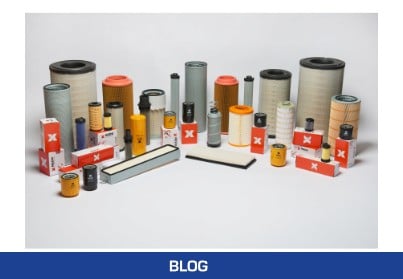
Cavitation destroys a pump in record time. Start by checking and replacing your hydraulic filters – our offer includes a full range of high-quality REDX filters. A pump failure often contaminates the entire system, which can damage cylinder seals. It's a good idea to consider replacing them with proven VICORTEX seal kits. If it's too late for prevention, contact us - we'll help you select a new pump for your JCB, CAT, or Komatsu machine.
Related posts
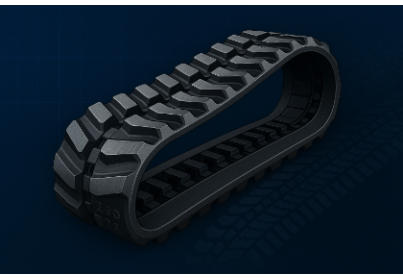 How to Correctly Measure and Read a Rubber Track Size? A Step-by-Step Guide.
Buying the wrong tracks is a costly mistake. Our simple, step-by-step guide will teach you how to independently...
Read more
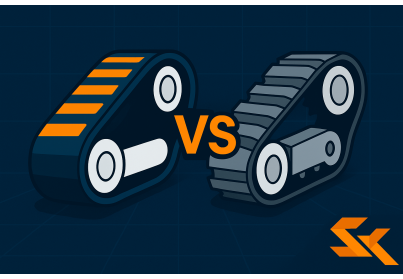 Rubber Tracks vs. Steel Tracks? A Guide to Choosing the Best for Your Machine
Choosing between rubber and steel tracks is a key decision that affects costs and work efficiency. Learn the key...
Read more
 Anatomy of a Tracked Undercarriage – Get to Know Rollers, Sprockets, Idlers, and Chains
If the engine is the heart of a machine, the undercarriage is its legs. Understanding its construction is key to...
Read more
 Adjusting Track Tension – The Key to a Long Undercarriage Life
A track that is too loose or too tight is a direct path to a costly failure. Our step-by-step guide will show you how...
Read more
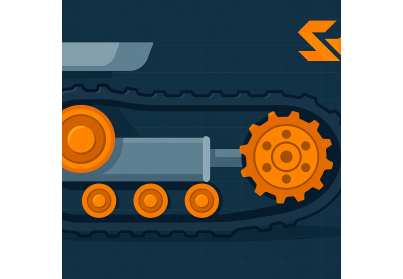 7 Operator Mistakes That Destroy a Tracked Undercarriage
The undercarriage can account for up to 50% of a machine's maintenance costs. Many of these are due to bad habits....
Read more
WE OFFER PRODUCTS OF THE BEST BRANDS



















SERWIS KOP Sp. z o.o. Sp.k.
ul. Podkarpacka 57A, 35-082 Rzeszów
NIP: 813-352-97-49 REGON: 180286726
Opening hours
Telephone support - Monday - Friday (8:00 AM – 5:00 PM)
Order pick-up - Monday - Friday (8:00 AM – 4:30 PM)
Email
[email protected]
[email protected]
Gadu-Gadu communicator
GG: 4185846 - Daniel
ul. Podkarpacka 57A, 35-082 Rzeszów
NIP: 813-352-97-49 REGON: 180286726
Opening hours
Telephone support - Monday - Friday (8:00 AM – 5:00 PM)
Order pick-up - Monday - Friday (8:00 AM – 4:30 PM)
[email protected]
[email protected]
Gadu-Gadu communicator
GG: 4185846 - Daniel
Phone
+48 17 864 31 00
+48 17 864 00 24
+48 17 864 25 96
Mobile phone
+48 607-700-547
+48 695-944-818
+48 691-330-531
+48 690-906-751
Fax
+48 17 864 31 20
+48 17 864 31 00
+48 17 864 00 24
+48 17 864 25 96
Mobile phone
+48 607-700-547
+48 695-944-818
+48 691-330-531
+48 690-906-751
Fax
+48 17 864 31 20