-


-


-
 ALL CATEGORIES
-
-
-
-
-
-
SLEW SYSTEM
-
-
-
-
-
AXLES
- TIE RODS
- KIT SPIDER FOR DRIVE SHAFTS
- DIFFERENTIAL
- MOUNT THE KNUCKLE
- KIT SPIDER FOR AXLE SHAFTS
- HUB / GEAR REDUCTION
- PROPSHAFTS
- SOLENOID VALVES / COILS
- FLANGES / COUPLING YOKES
- BEARINGS
- BUSHES / WASHERS MOUNT AXLE
- AXLE / DIFFERENTIAL HOUSING
- DRIVESHAFTS / CENTER JOINTS
- BOLTS / NUTS / STRAPS
- LOCK / CIRCLIP / CLIP
- CROWN WHEEL AND PINIONS
- SEALS
- OTHERS
-
-
-
-
-
-
-
-
ENGINE
-
-
-
-
-
COILS / SOLENOID VALVES
-
SWIVELS / TURNING JOINTS
-
PUMPS / STEERING VALVES / MOTORS
-
-
-
VALVES
-
HYDRAULIC HOSES / PIPES
-
RAMS
-
ACCUMULATORS
-
QUICKHITCHES
-
-
-
BOLTS / NUTS / WASHERS
-
PUMP DRIVESHAFTS
-
SEALS VALVES / PUMPS
-
OTHERS
-
-
-
-
-
-
-
TIMING
-
EQUIPMENT
-
-
LUBRICATION SYSTEM
-
-
INDUCTION / EXHAUST SYSTEM
-
SEALS / GASKET SETS
-
ENGINE MOUNTING
-
SERVICE TOOLS
-
-
-
-
-
-
STABILIZERS
-
-
-
-
-
-
FUSES / FUSE BOXES
-
RELAYS / FLASHERS
-
REVERSE ALARM
-
-
HEATERS / BLOWERS
-
BATTERY ISOLATER SWITCH
-
-
-
-
-
OILS
-
FLUIDS
-
-
-
PAINTS
-
-
-
-
-
-
-
GLASS / CAB GLAZING
-
-
-
RUBBER SEALS - GLASS
-
ASSEMBLY KITS / ADHESIVES
-
-
-
-
-
ADAPTERS
-
BOLTS / LOCKS
-
-
-
-
HYDRAULIC INSTALLATIONS
-
TOEPLATES
-
TOOTH RIPPER
-
-
-
HYDRAULIC HAMMERS / TOOLS
-
PLOWS
-
QUICKHITCHES
-
FORKS
-
-
-
EARTH DRILL / AUGER
-
SWEEPER / COMPONENTS
-
SWINGOTILT / PLATFORMS
-
-
-
-
-
ACCESSORIES
-
DECAL / STICKERS
-
-
-
GADGETS
-
CLOTHES
-
FAN ZONE
-
-
-
 BODYWORK
 UNDERCARRIAGE
 TRANSMISSION / AXLES / WHEELS
 STEERING / CONTROL
 HYDRAULICS
 BRAKES
 ENGINE
 ARMS / SWING / STABILIZERS
 ELECTRICS
 OILS / FLUIDS / LUBRICANTS / PAINTS
 FILTERS
 GLASS / CAB GLAZING
 TEETH / ADAPTORS / PIN LOCKS
 ATTACHMENTS
 ACCESSORIES / TOOLS



Brake Master Cylinder & Booster: A Complete Guide to Failures in Construction Machinery
Brake Master Cylinder and Booster: Diagnosing Failures in Construction Machinery
When Leg Power Must Stop Tons of Steel
The braking system in wheeled machines like JCB backhoe loaders or Manitou telehandlers is a system where there is no room for compromise. Its job is to safely and effectively stop a multi-ton giant, often moving on difficult terrain with a heavy load. At the heart of this system, converting the operator's foot pressure into powerful hydraulic force, are two cooperating components: the master cylinder and the booster. The failure of either one leads to a dramatic loss of braking effectiveness or its complete absence. In this in-depth analysis, we will explain how they work, what their failure symptoms are, and how to diagnose them correctly.
Anatomy of the Braking System: The Chain of Command
The braking process is a precise chain of events where the master cylinder and booster play a key role:
- Step 1: The operator presses the brake pedal.
- Step 2: The booster detects this pressure and multiplies the force with which the pushrod acts on the master cylinder's piston.
- Step 3: The master cylinder, a hydraulic pump, converts this amplified mechanical force into pressure in the brake fluid or oil.
- Step 4: The pressure is transmitted through brake lines to the calipers (in disc brakes) or axle pistons (in wet brakes).
- Step 5: The pistons in the calipers press the pads against the discs, generating friction and stopping the machine.
A failure of the master cylinder or booster breaks this chain at its very beginning.
Failure Analysis of the Brake Master Cylinder
The master cylinder is a precision hydraulic cylinder. Its main job is to create pressure. Most common failures involve the loss of this ability.
1. Internal Leaks – A "Soft" Pedal that Sinks to the Floor
Symptom: When pressed, the brake pedal feels "soft" or "spongy" and slowly sinks to the floor, with little to no braking force. After a few quick pumps, the pedal briefly firms up, but the problem returns.
Analysis: This is a classic symptom of worn internal piston seals in the master cylinder. When the operator presses the pedal, the piston, instead of pushing fluid into the lines, allows it to bypass the seal and return to the reservoir. No pressure is built. This wear is a natural part of service life but is accelerated by old, contaminated brake fluid that has lost its lubricating properties and causes corrosion.
Diagnosis: The "Pedal Test." Press the brake pedal hard and hold it. If it slowly sinks, this is an almost certain diagnosis of an internal leak in the master cylinder (assuming there are no external leaks in the system).
2. External Leaks – Fluid Loss
Symptom: The fluid in the reservoir regularly drops, and there are signs of moisture under the machine or around the booster.
Analysis: Most often, the rear seal of the master cylinder, where it meets the booster's pushrod, has failed. The fluid leaks into the booster (in a vacuum-assisted system) or externally.
Diagnosis: Visual inspection. Thoroughly inspect the master cylinder, its connection to the booster, and all brake lines for signs of leaks. Any leak qualifies the cylinder for immediate rebuild (seal replacement) or replacement.
Part II: Failure Analysis of the Brake Booster
The master cylinder alone would not be able to generate enough pressure to stop a multi-ton machine with the force of a human leg. That's why assistance is essential. In construction machinery, the most common solution is an air-over-hydraulic booster, which uses compressed air from the machine's pneumatic system to multiply the force.
How Does an Air-Over-Hydraulic Booster Work?
The booster is an intelligent force amplifier. Inside, there is a large diaphragm and a system of valves. When the operator presses the brake pedal, the pushrod from the master cylinder opens a valve in the booster. This, in turn, allows compressed air (at 8-10 bar / 115-145 PSI) onto the large surface area of the diaphragm. The force generated by the air pressure is immense, and it is this force, not the operator's leg, that does the main work of pushing the piston in the master cylinder.
Anatomy of a Booster Failure:
1. Complete Loss of Assist – "Hard" Brake Pedal
Symptom: The brake pedal becomes extremely hard, and immense force is required to stop the machine. Braking effectiveness is almost zero.
Analysis: This is a classic symptom of a complete booster failure. The operator is trying to create pressure solely with muscle power. The cause should be sought in the booster's supply system or internally.
Step-by-Step Diagnosis:
1. Check Air Supply: This is the first and most common cause. Ensure there is correct pressure in the machine's air system. Check if the air line to the booster is cracked, kinked, or clogged.
2. Check Control Valve: The valve inside the booster is activated by the master cylinder pushrod. Mechanical damage or seizure will prevent it from letting air in.
3. Check Diaphragm: A rupture in the main diaphragm will cause the compressed air to escape without generating any force.
2. Hissing Air Sound During Braking
Symptom: Every time the brake pedal is pressed or released, a loud, clear hiss of escaping air is heard from the booster area.
Analysis: This is clear evidence of a leak in the booster. Most often, the pushrod seal is damaged or the diaphragm is ruptured. The system loses pressure, and the compressor has to run more frequently to replenish it.
Diagnosis: Using soapy water on the air line connections can help locate external leaks. Internal leaks qualify the booster for replacement or professional rebuilding.
Part III: Proper Service – The Key to Reliability and Safety
Service Rules for Disc Brakes:
- When to replace pads and discs? Brake pads should be replaced when the friction material thickness drops to a few millimeters (usually 2-3 mm). Never allow the metal backing plate to contact the disc! Brake discs are replaced when their thickness falls below the minimum value stamped on their edge, or if deep grooves or cracks appear.
- Replace in pairs: Brake pads and discs always must be replaced as a complete set on an entire axle (on both wheels). Replacing only one side will cause uneven braking force and make the machine pull to one side.
- Caliper inspection is mandatory: With every pad change, thoroughly inspect the condition of the piston dust boots. If they are torn, water and dirt will get inside, leading to corrosion and a seized piston. In this case, a caliper rebuild using a new seal kit, such as one from the VICORTEX brand, is necessary.
FAQ - Frequently Asked Questions
1. What brake fluid should I use?
It depends on the machine! Many backhoe loaders use a special LHM mineral oil, not standard DOT fluid. Using the wrong fluid will destroy all rubber seals in the system. Always check the manual!
2. Why is the brake pedal "soft" even after bleeding the system?
If you are certain there is no air in the system, but the pedal is still "spongy," it is an almost certain diagnosis of an internal leak in the brake master cylinder. It requires immediate repair or replacement.
3. Can I just top up the brake fluid if I notice it's low?
Topping up is a temporary fix. The brake system is a closed system, and fluid loss always indicates a leak. It must be located and repaired as soon as possible. Operating with a leaking system risks a sudden loss of brakes.
4. Why are my new brakes squealing?
Light squealing during the initial break-in period is normal as the pads bed into the disc. However, if the noise is loud and persistent, it could indicate contaminated pads (e.g., with grease), low-quality pads, or a seized piston in the caliper.
Brake performance is your priority. Don't skimp on parts.
Regular service and the use of high-quality parts are the foundation of safety. Our offer includes everything you need for brake system service: from brake pads and discs, through plate kits for wet brakes, to complete master cylinders, boosters, and caliper seal kits from the VICORTEX brand. Remember to use clean oil and high-quality REDX filters. Contact us!
Related posts
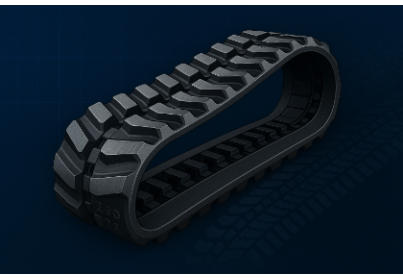 How to Correctly Measure and Read a Rubber Track Size? A Step-by-Step Guide.
Buying the wrong tracks is a costly mistake. Our simple, step-by-step guide will teach you how to independently...
Read more
 Rubber Tracks vs. Steel Tracks? A Guide to Choosing the Best for Your Machine
Choosing between rubber and steel tracks is a key decision that affects costs and work efficiency. Learn the key...
Read more
 Anatomy of a Tracked Undercarriage – Get to Know Rollers, Sprockets, Idlers, and Chains
If the engine is the heart of a machine, the undercarriage is its legs. Understanding its construction is key to...
Read more
 Adjusting Track Tension – The Key to a Long Undercarriage Life
A track that is too loose or too tight is a direct path to a costly failure. Our step-by-step guide will show you how...
Read more
 7 Operator Mistakes That Destroy a Tracked Undercarriage
The undercarriage can account for up to 50% of a machine's maintenance costs. Many of these are due to bad habits....
Read more
WE OFFER PRODUCTS OF THE BEST BRANDS



















SERWIS KOP Sp. z o.o. Sp.k.
ul. Podkarpacka 57A, 35-082 Rzeszów
NIP: 813-352-97-49 REGON: 180286726
Opening hours
Telephone support - Monday - Friday (8:00 AM – 5:00 PM)
Order pick-up - Monday - Friday (8:00 AM – 4:30 PM)
Email
[email protected]
[email protected]
Gadu-Gadu communicator
GG: 4185846 - Daniel
ul. Podkarpacka 57A, 35-082 Rzeszów
NIP: 813-352-97-49 REGON: 180286726
Opening hours
Telephone support - Monday - Friday (8:00 AM – 5:00 PM)
Order pick-up - Monday - Friday (8:00 AM – 4:30 PM)
[email protected]
[email protected]
Gadu-Gadu communicator
GG: 4185846 - Daniel
Phone
+48 17 864 31 00
+48 17 864 00 24
+48 17 864 25 96
Mobile phone
+48 607-700-547
+48 695-944-818
+48 691-330-531
+48 690-906-751
Fax
+48 17 864 31 20
+48 17 864 31 00
+48 17 864 00 24
+48 17 864 25 96
Mobile phone
+48 607-700-547
+48 695-944-818
+48 691-330-531
+48 690-906-751
Fax
+48 17 864 31 20