-


-


-
 ALL CATEGORIES
-
-
-
-
-
-
SLEW SYSTEM
-
-
-
-
-
AXLES
- TIE RODS
- KIT SPIDER FOR DRIVE SHAFTS
- DIFFERENTIAL
- MOUNT THE KNUCKLE
- KIT SPIDER FOR AXLE SHAFTS
- HUB / GEAR REDUCTION
- PROPSHAFTS
- SOLENOID VALVES / COILS
- FLANGES / COUPLING YOKES
- BEARINGS
- BUSHES / WASHERS MOUNT AXLE
- AXLE / DIFFERENTIAL HOUSING
- DRIVESHAFTS / CENTER JOINTS
- BOLTS / NUTS / STRAPS
- LOCK / CIRCLIP / CLIP
- CROWN WHEEL AND PINIONS
- SEALS
- OTHERS
-
-
-
-
-
-
-
-
ENGINE
-
-
-
-
-
COILS / SOLENOID VALVES
-
SWIVELS / TURNING JOINTS
-
PUMPS / STEERING VALVES / MOTORS
-
-
-
VALVES
-
HYDRAULIC HOSES / PIPES
-
RAMS
-
ACCUMULATORS
-
QUICKHITCHES
-
-
-
BOLTS / NUTS / WASHERS
-
PUMP DRIVESHAFTS
-
SEALS VALVES / PUMPS
-
OTHERS
-
-
-
-
-
-
-
TIMING
-
EQUIPMENT
-
-
LUBRICATION SYSTEM
-
-
INDUCTION / EXHAUST SYSTEM
-
SEALS / GASKET SETS
-
ENGINE MOUNTING
-
SERVICE TOOLS
-
-
-
-
-
-
STABILIZERS
-
-
-
-
-
-
FUSES / FUSE BOXES
-
RELAYS / FLASHERS
-
REVERSE ALARM
-
-
HEATERS / BLOWERS
-
BATTERY ISOLATER SWITCH
-
-
-
-
-
OILS
-
FLUIDS
-
-
-
PAINTS
-
-
-
-
-
-
-
GLASS / CAB GLAZING
-
-
-
RUBBER SEALS - GLASS
-
ASSEMBLY KITS / ADHESIVES
-
-
-
-
-
ADAPTERS
-
BOLTS / LOCKS
-
-
-
-
HYDRAULIC INSTALLATIONS
-
TOEPLATES
-
TOOTH RIPPER
-
-
-
HYDRAULIC HAMMERS / TOOLS
-
PLOWS
-
QUICKHITCHES
-
FORKS
-
-
-
EARTH DRILL / AUGER
-
SWEEPER / COMPONENTS
-
SWINGOTILT / PLATFORMS
-
-
-
-
-
ACCESSORIES
-
DECAL / STICKERS
-
-
-
GADGETS
-
CLOTHES
-
FAN ZONE
-
-
-
 BODYWORK
 UNDERCARRIAGE
 TRANSMISSION / AXLES / WHEELS
 STEERING / CONTROL
 HYDRAULICS
 BRAKES
 ENGINE
 ARMS / SWING / STABILIZERS
 ELECTRICS
 OILS / FLUIDS / LUBRICANTS / PAINTS
 FILTERS
 GLASS / CAB GLAZING
 TEETH / ADAPTORS / PIN LOCKS
 ATTACHMENTS
 ACCESSORIES / TOOLS

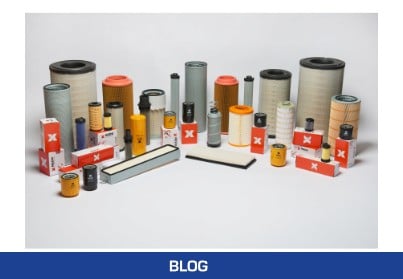


Transmissions in Construction Machinery: Manual, Powershift, Autoshift – A Complete Analysis
Transmissions in Construction Machinery: Manual, Powershift, Autoshift – A Complete Analysis
The Brain of the Drivetrain
The engine generates power, but the transmission is the brain that decides how that power is used. In conjunction with the torque converter and axles, it converts the engine's high rotational speed into immense pushing force or higher transport speed. In the world of construction machinery, from the legendary JCB 3CX backhoes to giant CAT wheel loaders, the evolution of transmissions has been key to increasing efficiency, comfort, and economy. In this comprehensive guide, we will analyze the construction, principles of operation, and most common failures of the three main types of gearboxes: Manual, Powershift, and Autoshift.
The Foundation: Torque vs. Speed
To understand the purpose of a transmission, we must know a basic principle: an internal combustion engine is most efficient within a narrow RPM range. The gearbox acts like a system of levers that allows you to "trade" speed for force (torque) and vice versa.
- Low gear (high reduction): The machine moves slowly but has enormous force for pushing material or climbing hills. The engine speed is greatly reduced, and the torque is multiplied.
- High gear (low reduction): The machine moves quickly (e.g., during road travel) but has little pushing force. The engine speed is only slightly reduced.
The transmission's job is to allow the operator to select the optimal gear ratio for the current task.
Type 1: Manual Transmission – Simplicity and Durability
This is the oldest and simplest type of transmission, found today mainly in older machines or in base-level equipment trims. Its construction is very similar to a car's gearbox but is much more robust.
Construction and Operation
It consists of several shafts with gears of different sizes. Shifting gears involves mechanically moving forks that, in turn, slide a collar with a synchronizer to engage the appropriate pair of gears. The key component here is the friction clutch (disc, pressure plate, bearing), which the operator must depress to momentarily disconnect the engine from the transmission to allow a gear change.
Fun Fact: "Crash Box"
In very old machines (e.g., historical Fermec models), non-synchronized transmissions (so-called "crash boxes") were used. Shifting gears required the operator to perfectly match the engine and transmission shaft speeds ("double-clutching"), and a failed attempt resulted in a loud grinding noise.
Advantages of a Manual Transmission:
- Simple and cheap design: Few complex components, which translates to a lower purchase price and lower repair costs.
- High efficiency: The mechanical connection ensures minimal power loss.
- Reliability: With proper operation, it is a very durable design.
Disadvantages and Common Failures:
- Requires interrupting the drive: Every gear change requires pressing the clutch and stopping the machine, which drastically reduces productivity, especially in cyclical loading work.
- Requires operator skill: Proper clutch operation has a huge impact on its lifespan.
- Friction clutch wear: The clutch disc is a wear item. Its wear is manifested by "slipping" – the engine revs, but the machine doesn't accelerate. Replacement requires splitting the machine.
- Synchronizer damage: Symptoms include grinding and difficulty engaging a specific gear.
- Oil leaks: Worn seals on the input and output shafts are a common problem in older machines.
Type 2: Powershift Transmission – A Revolution in Productivity
The Powershift transmission (also called semi-automatic) is the most popular type of gearbox in modern backhoe loaders and wheel loaders. It is the solution that eliminated the biggest drawback of the manual transmission – the need to stop the machine to change gears. Powershift allows for shifting "under load," which has radically increased work efficiency and comfort.
Construction and Operation: The Magic of Hydraulics
In a Powershift transmission, there is no traditional clutch or synchronizers. Their role is taken over by hydraulically controlled clutch packs. Each gear and direction of travel (forward/reverse) has its own dedicated pack. This assembly consists of alternating:
- Friction plates (external): Steel plates coated with a special organic or sintered friction material. They have external teeth that lock into the clutch basket.
- Steel plates (internal): Smooth, plain steel plates with internal teeth that are splined to a shaft.
When the operator selects a gear (with a lever or knob), a solenoid valve directs oil pressure to a piston that powerfully compresses the corresponding clutch pack. The friction between the plates locks the entire pack together, causing it to rotate as a single unit and transmit power to the selected gear. Releasing the oil pressure disengages the pack.
Anatomy of a Powershift Failure:
"Burnt Clutches" – The Symptom, Not the Cause!
The most common diagnosis is "burnt clutches." However, this is only a symptom. The cause is always the slipping of the clutch pack, which occurs due to insufficient clamping pressure. The friction generates extreme heat, which degrades the oil and burns the friction linings. Installing a new set of plates without eliminating the cause of the low pressure is a guarantee of another failure.
The real root causes that must be diagnosed:
- Low or old oil: The root of all evil. Too little oil causes a pressure drop, and old, degraded oil loses its properties and leads to overheating. - Clogged transmission oil filter: Restricts oil flow and pressure. Regular replacement with a high-quality filter, like REDX, is crucial. - Leaking clutch piston seals: Worn, hard seals cause an internal leak. Oil escapes instead of applying pressure, causing the clutches to slip. - Failed transmission charge pump: A worn pump cannot generate enough pressure to supply the control system and torque converter. - Faulty solenoid valve: A damaged solenoid may not open fully, restricting oil flow to the clutch pack.
Type 3: Autoshift and TorqueLock Transmission – Intelligence and Economy
Autoshift is the evolution of the Powershift. Instead of manually selecting each gear, the operator only chooses the direction of travel, and an electronic controller (TCU) decides when to shift, similar to an automatic transmission in a car. But the real revolution in this technology is the TorqueLock system, popularized by JCB.
How Does TorqueLock Work?
The biggest disadvantage of a torque converter system is power loss (slip), especially during high-speed road travel. The converter generates unnecessary heat and increases fuel consumption. The TorqueLock system is an additional mechanical clutch inside the torque converter. When the machine reaches a certain speed in higher gears, the controller hydraulically locks this clutch. This creates a direct, 1:1 mechanical connection between the engine and the transmission, eliminating slip. As a result, all of the engine's power goes to the wheels, which reduces fuel consumption during road travel by up to 25% and allows for higher speeds.
Autoshift Failures: The Role of Electronics
In addition to the typical mechanical and hydraulic failures known from Powershift, automatic transmissions introduce electronic issues:
- Speed sensor failure: A faulty input or output shaft speed sensor sends incorrect data to the computer, causing harsh shifting, incorrect gear selection, or limp mode. - Calibration issues: After any major repair, an Autoshift transmission requires calibration with a service tool to "learn" the clutch engagement points. Lack of calibration results in jerky shifting. - TCU failure: Although rare, damage to the control computer itself can lead to a complete inability to shift gears.
FAQ - Frequently Asked Questions
1. My machine jerks when changing direction (forward/reverse). What's the cause?
This is a classic symptom of worn friction plates in the forward/reverse clutch pack. It can also be caused by a pressure problem or a faulty solenoid controlling that specific clutch.
2. What is a "stall test"?
It's a diagnostic test for the torque converter, performed before transmission removal. It involves measuring the maximum RPM the engine can achieve while the machine is held stationary by the brakes with a gear engaged. An RPM that is too high indicates excessive slippage in the converter.
3. What oil should I use in a Powershift transmission?
Always and only use oil that meets the manufacturer's specifications (usually UTTO or TO-4 class). Using the wrong oil (e.g., standard hydraulic oil) will destroy the friction linings.
4. Is rebuilding a Powershift transmission cost-effective?
Yes, provided it is done comprehensively. Replacing only the friction plates is a false economy. A professional rebuild with the replacement of all seals, bearings, and an inspection of the pump restores the transmission to full functionality for thousands more hours and is cheaper than buying a new gearbox.
Transmission failure? Opt for a comprehensive repair!
Regular service and high-quality REDX filters are the best prevention. If a failure has occurred, our offer includes everything you need for a professional Powershift transmission rebuild in JCB, CAT, Volvo, and other machines. We offer complete friction and steel plate kits, seal kits, solenoids, pumps, and factory-remanufactured torque converters. Contact us!
Related posts
 Isuzu: The Reliable Japanese Heart of Millions of Excavators Worldwide
Isuzu is the world leader in producing engines for excavators. Learn the history of this Japanese pioneer, its...
Read more
 Leyland: The Historic Power of British Industry
Leyland is a legend of British industry. Learn about its rise and fall, the iconic 4/98 series engines that powered...
Read more
 How to Correctly Measure and Read a Rubber Track Size? A Step-by-Step Guide.
Buying the wrong tracks is a costly mistake. Our simple, step-by-step guide will teach you how to independently...
Read more
 Rubber Tracks vs. Steel Tracks? A Guide to Choosing the Best for Your Machine
Choosing between rubber and steel tracks is a key decision that affects costs and work efficiency. Learn the key...
Read more
 Anatomy of a Tracked Undercarriage – Get to Know Rollers, Sprockets, Idlers, and Chains
If the engine is the heart of a machine, the undercarriage is its legs. Understanding its construction is key to...
Read more
WE OFFER PRODUCTS OF THE BEST BRANDS



















SERWIS KOP Sp. z o.o. Sp.k.
ul. Podkarpacka 57A, 35-082 Rzeszów
NIP: 813-352-97-49 REGON: 180286726
Opening hours
Telephone support - Monday - Friday (8:00 AM – 5:00 PM)
Order pick-up - Monday - Friday (8:00 AM – 4:30 PM)
Email
[email protected]
[email protected]
Gadu-Gadu communicator
GG: 4185846 - Daniel
ul. Podkarpacka 57A, 35-082 Rzeszów
NIP: 813-352-97-49 REGON: 180286726
Opening hours
Telephone support - Monday - Friday (8:00 AM – 5:00 PM)
Order pick-up - Monday - Friday (8:00 AM – 4:30 PM)
[email protected]
[email protected]
Gadu-Gadu communicator
GG: 4185846 - Daniel
Phone
+48 17 864 31 00
+48 17 864 00 24
+48 17 864 25 96
Mobile phone
+48 607-700-547
+48 695-944-818
+48 691-330-531
+48 690-906-751
Fax
+48 17 864 31 20
+48 17 864 31 00
+48 17 864 00 24
+48 17 864 25 96
Mobile phone
+48 607-700-547
+48 695-944-818
+48 691-330-531
+48 690-906-751
Fax
+48 17 864 31 20