-


-


-
 ALL CATEGORIES
-
-
-
-
-
-
SLEW SYSTEM
-
-
-
-
-
AXLES
- TIE RODS
- KIT SPIDER FOR DRIVE SHAFTS
- DIFFERENTIAL
- MOUNT THE KNUCKLE
- KIT SPIDER FOR AXLE SHAFTS
- HUB / GEAR REDUCTION
- PROPSHAFTS
- SOLENOID VALVES / COILS
- FLANGES / COUPLING YOKES
- BEARINGS
- BUSHES / WASHERS MOUNT AXLE
- AXLE / DIFFERENTIAL HOUSING
- DRIVESHAFTS / CENTER JOINTS
- BOLTS / NUTS / STRAPS
- LOCK / CIRCLIP / CLIP
- CROWN WHEEL AND PINIONS
- SEALS
- OTHERS
-
-
-
-
-
-
-
-
ENGINE
-
-
-
-
-
COILS / SOLENOID VALVES
-
SWIVELS / TURNING JOINTS
-
PUMPS / STEERING VALVES / MOTORS
-
-
-
VALVES
-
HYDRAULIC HOSES / PIPES
-
RAMS
-
ACCUMULATORS
-
QUICKHITCHES
-
-
-
BOLTS / NUTS / WASHERS
-
PUMP DRIVESHAFTS
-
SEALS VALVES / PUMPS
-
OTHERS
-
-
-
-
-
-
-
TIMING
-
EQUIPMENT
-
-
LUBRICATION SYSTEM
-
-
INDUCTION / EXHAUST SYSTEM
-
SEALS / GASKET SETS
-
ENGINE MOUNTING
-
SERVICE TOOLS
-
-
-
-
-
-
STABILIZERS
-
-
-
-
-
-
FUSES / FUSE BOXES
-
RELAYS / FLASHERS
-
REVERSE ALARM
-
-
HEATERS / BLOWERS
-
BATTERY ISOLATER SWITCH
-
-
-
-
-
OILS
-
FLUIDS
-
-
-
PAINTS
-
-
-
-
-
-
-
GLASS / CAB GLAZING
-
-
-
RUBBER SEALS - GLASS
-
ASSEMBLY KITS / ADHESIVES
-
-
-
-
-
ADAPTERS
-
BOLTS / LOCKS
-
-
-
-
HYDRAULIC INSTALLATIONS
-
TOEPLATES
-
TOOTH RIPPER
-
-
-
HYDRAULIC HAMMERS / TOOLS
-
PLOWS
-
QUICKHITCHES
-
FORKS
-
-
-
EARTH DRILL / AUGER
-
SWEEPER / COMPONENTS
-
SWINGOTILT / PLATFORMS
-
-
-
-
-
ACCESSORIES
-
DECAL / STICKERS
-
-
-
GADGETS
-
CLOTHES
-
FAN ZONE
-
-
-
 BODYWORK
 UNDERCARRIAGE
 TRANSMISSION / AXLES / WHEELS
 STEERING / CONTROL
 HYDRAULICS
 BRAKES
 ENGINE
 ARMS / SWING / STABILIZERS
 ELECTRICS
 OILS / FLUIDS / LUBRICANTS / PAINTS
 FILTERS
 GLASS / CAB GLAZING
 TEETH / ADAPTORS / PIN LOCKS
 ATTACHMENTS
 ACCESSORIES / TOOLS


How to Choose the Right Backhoe Bucket? A Complete Guide to JCB Models & Applications
How to Choose the Right Backhoe Bucket? A Complete Guide to JCB Models & Applications
Why Bucket Choice Matters More Than You Think
To many operators, a bucket is just a bucket – it's meant to dig. However, this is a mistake that costs thousands annually. A backhoe loader, like the iconic JCB 3CX or 4CX, is an incredibly versatile machine, and its backhoe arm is the heart of that versatility. Using the wrong bucket for the job is a direct path to higher fuel consumption, slower cycle times, and worst of all, accelerated wear on the pins, bushings, and the entire boom structure. In this complete guide, we will analyze the different types of genuine JCB backhoe buckets, from standard to specialized, to help you choose the perfect tool for any task and maximize your machine's efficiency.
Anatomy of a Backhoe Bucket – What Defines Its Durability?
Before we get into the types, let's look at the bucket's construction. Its durability is determined not just by weight, but by the quality of materials used and the intelligent design, which in JCB's case is the result of decades of experience.
- Shell (Body): The main body of the bucket. In high-quality buckets, this is often rolled from a single piece of steel, which gives it extra rigidity and helps with material release.
- Cutting Edge and Teeth (GET): The most important working parts. The cutting edge is the blade to which the teeth are attached. Their quality and mounting system determine ground penetration.
- Side Plates: Reinforce the sides of the bucket and protect them from wear. On HD buckets, these are thicker and often have additional shrouds.
- Hanger (Mount): The "ears" of the bucket where the pins connect. The precision of these bores has a key impact on play and the life of the connection to the arm.
- Reinforcements: Additional wear strips (ribs) welded onto the shell of heavy-duty buckets, which drastically increase their resistance to deformation in tough conditions.
JCB engineers design buckets using Finite Element Analysis (FEA) to optimize digging geometry. This means the bucket shape is perfectly matched to the arm's kinematics, maximizing breakout force and making it easier to fill, which reduces resistance and saves fuel.
Type 1: General Purpose (GP) Bucket
This is the standard, most versatile bucket for a backhoe loader, ideal for most typical excavation jobs. It's a compromise between weight, capacity, and durability. Models like the JCB 980/89993 (600mm) are the most common sight on job sites.
Key Features of GP Buckets:
- Geometry: Designed for versatility. FEA ensures optimal digging geometry and easy filling. They provide a flat-bottomed trench.
- Application: Ideal for digging in soil (Class I-IV), working on foundations, utility trenching (cables, pipes), and loading soil or sand.
- Construction: They have a solid, but not overly heavy, design to avoid unnecessarily burdening the machine. The top section is rolled for added stiffness.
- Service: Equipped with replaceable teeth (often bolt-on for easy field service) and optional pin kits (e.g., 980/A5083) to allow for mounting on a quickhitch.
Technical Specification (GP Bucket Examples for JCB 3CX/4CX)
| Part Number (less pins) | Width mm (in) | Capacity (m³) | Weight (kg) | Application |
|---|---|---|---|---|
| 980/89989 | 305 (12) | 0.069 | 105 | Narrow trenches, drainage |
| 980/89991 | 450 (18) | 0.120 | 114 | Standard trenches, foundations |
| 980/89993 | 600 (24) | 0.174 | 136 | Universal, most popular |
| 980/89994 | 800 (31) | 0.248 | 167 | High-volume work, loading |
Type 2: Heavy Duty (HD) Bucket
When conditions get tough and the ground is full of rocks, rubble, or hard-packed clay, a standard GP bucket will quickly be destroyed or deformed. This is where Heavy Duty (HD) buckets come into play.
How Does an HD Bucket Differ from a GP?
The differences are fundamental and stem from the construction:
- Tooth System: On HD buckets, the teeth are typically mounted on weld-on adapters. This design is far more resistant to side-loads and impacts than the bolt-on teeth found on many GP buckets.
- Additional Reinforcements: HD buckets feature extra wear strips (ribs) welded onto the shell and sides. These reinforcements drastically increase structural rigidity and protect the bucket from abrasion and cracking in aggressive material.
- Thicker Material: The entire structure, from the cutting edge to the side plates, is made of thicker, often hardened steel (like Hardox or boron steel).
All this makes an HD bucket significantly heavier than a GP bucket of the same width (compare a 600mm GP at 136 kg to a 600mm HD at 151 kg), but its service life in tough conditions is incomparably longer.
Technical Specification (HD Bucket Examples for JCB 3CX/4CX)
| Part Number (less pins) | Width mm (in) | Capacity (m³) | Weight (kg) | Application |
|---|---|---|---|---|
| 980/90013 | 250 (10) | 0.04 | 105 | Very narrow trenching in hard ground |
| 980/90016 | 450 (18) | 0.09 | 122 | Demolition, rocky soil |
| 980/90018 | 600 (24) | 0.12 | 151 | Heavy-duty universal bucket |
| 980/90019 | 800 (31) | 0.17 | 190 | Heavy loading work |
Type 3: Deep Profile Bucket
When the priority is not precision, but volume and material moving speed, deep profile buckets come into play. As the name suggests, their design is deeper, allowing for a much larger volume of material to be scooped up in a single cycle.
Key Features of Deep Profile Buckets:
- Larger Capacity: Comparing a 600mm GP bucket (0.174 m³) with its Deep Profile counterpart (0.24 m³), we see a capacity increase of nearly 40% for the same digging width.
- Application: They are ideal for mass excavation, loading dump trucks in tight spaces (where every cycle counts), and for high-volume trenching.
- Limitations: Due to their larger volume and weight, they are not recommended for working at full arm reach in unstable ground. They also require a bit more power from the machine's hydraulics.
Technical Specification (Deep Profile Bucket Examples for JCB 3CX/4CX)
| Part Number (less pins) | Width mm (in) | Capacity (m³) | Weight (kg) |
|---|---|---|---|
| 980/89980 | 305 (12) | 0.09 | 110 |
| 980/89983 | 450 (18) | 0.18 | 135 |
| 980/89984 | 600 (24) | 0.24 | 156 |
| 980/89986 | 900 (35) | 0.39 | 207 |
Type 4: Specialty Buckets – For Specific Tasks
Beyond standard digging, a backhoe's arm can perform precise engineering tasks. This, however, requires dedicated tools.
a) Grading Buckets
An indispensable tool for all finishing work. They are characterized by a wide, flat bottom with no teeth, ending in a straight cutting edge.
Application: Landscaping, shaping and leveling slopes, cleaning ditches, and site grading. They have drainage holes to reduce weight and ease working in wet material.
b) Tilting Grading Buckets
This is an evolution of the standard grading bucket. Equipped with one or two hydraulic cylinders, they allow the bucket to tilt 45° in either direction.
Application: They significantly increase productivity by eliminating the need for constant, precise machine repositioning. An operator can form a slope with varying angles while keeping the machine in one position.
c) Tapered Ditching Buckets (V-Ditch)
These have a characteristic trapezoidal shape.
Application: Designed for one specific purpose: forming "V" shaped ditches and canals in a single pass. This is the fastest and most accurate method for creating irrigation or drainage ditches.
d) Jaw Bucket
A 2-in-1 attachment. It looks like a standard digging bucket but features an additional, hydraulically controlled "thumb" that closes towards the bucket.
Application: Ideal for demolition and clean-up. It not only digs but also precisely grips irregular objects like logs, rocks, or debris. It requires an additional hydraulic circuit and is not compatible with a quickhitch.
e) Ripper Tooth
Not a bucket, but a powerful, single tine.
Application: Essential for work in extremely hard ground. It is used to break up and "rip" frozen ground, shale, compacted rubble, or asphalt, preparing the material to be removed by a standard bucket. It features a replaceable, hardened tooth.
Technical Specification (Select Specialty Buckets for JCB 3CX/4CX)
| Type | Part Number | Width (mm) | Capacity (m³) | Weight (kg) |
|---|---|---|---|---|
| Grading | 980/A2114 | 1520 | 0.215 | 150 |
| Grading | 980/A2113 | 1800 | 0.260 | 172 |
| Tilting Grading | 980/89975 | 1520 | 0.160 | 340 |
| Tapered 60° | 537/16100 | 1067 (top) / 305 (bottom) | 0.100 | 111 |
| Jaw Bucket | 531/19800 | 600 | 0.20 | 280 |
| Ripper | 990/81700 | N/A | N/A | - |
Type 5: Front Shovel Buckets (Loader Buckets)
A backhoe loader is a dual-function machine. The front shovel is just as important as the backhoe bucket, and its selection is equally critical. JCB offers two main variants here:
a) General Purpose (GP) Shovels
This is the standard, one-piece shovel intended mainly for loading loose materials and light earthmoving. Its key feature is a shorter bucket floor, which provides maximum breakout force and excellent visibility of the cutting edge. It is typically equipped with a bolt-on cutting edge or bolt-on teeth.
b) 6-in-1 Multi-Purpose Shovels
This is the most versatile front attachment and is standard on most JCB 3CX and 4CX machines. As the name implies, it combines 6 functions:
- Loading (like a standard shovel)
- Dozing (with the clam open, it acts as a dozer blade)
- Grading
- Grabbing (thanks to the opening clam)
- Backfilling (by controlled emptying through the bottom)
- Digging
It requires an additional hydraulic circuit to control the clam cylinders. It is heavier than a GP shovel, but its versatility is invaluable.
Technical Specification (Front Shovel Examples for 3CX/4CX)
| Type | Part Number | Width (mm) | Capacity (m³) | Weight (kg) |
|---|---|---|---|---|
| GP (Direct Mount) | 125/36700 | 2235 | 1.0 | 360 |
| 6-in-1 (Direct Mount) | 128/C1037 | 2235 | 1.00 | 715 |
| 6-in-1 (Direct Mount) | 128/C1010 | 2337 | 1.10 | 729 |
Key Principles of Selection and Operation
The Golden Mean Rule
The biggest mistake is buying the widest or heaviest-duty bucket "just in case." Using a 900mm Deep Profile bucket (weighing 207 kg) for routine trenching at full reach generates immense forces that drastically accelerate the wear of pins and bushings (even the best ones, like CORESPEX) and put stress on the arm structure. Always match the bucket to the task – use standard widths (450-600mm) for standard trenching, and save the wide grading or deep profile buckets for bulk and finishing work.
- Quickhitch Compatibility: Ensure the bucket you are buying is compatible with your quickhitch. Many buckets (as in the tables above) are sold "less pins" specifically for quickhitch use.
- Maintain Your GET: Working with worn-out teeth or a worn cutting edge destroys the bucket shell. Regular replacement of these wear parts is fundamental.
- Proper Operating Technique: Do not use a digging bucket for side-prying or leveraging. Side forces are the most destructive to the welds and mounts.
FAQ - Frequently Asked Questions
1. What buckets should I start with for a new JCB 3CX?
The absolute basic kit is: a 600mm digging bucket (for most earthmoving) and a 1500mm grading bucket (for finishing work). A narrow 300mm bucket is very useful for cable trenching.
2. Is an HD (Heavy Duty) bucket worth the extra cost?
Yes, if you regularly work in hard, rocky ground, heavy clay, or demolition. The extra weight and reinforced structure will pay for themselves many times over in longer life and lack of cracking.
3. Do buckets from other machine brands fit a JCB?
No. Each manufacturer (JCB, CAT, Volvo) uses a different pin spacing, pin diameter, and dipper arm width. A bucket must be dedicated to a specific machine or quickhitch system.
4. A tilting grading bucket or a tiltrotator?
A tilting bucket is a simple and durable solution for working on an angle. A tiltrotator is an advanced (and expensive) attachment that allows a bucket to rotate 360 degrees and tilt, turning the excavator into a surgical tool. For a backhoe loader, the tilting bucket is the more common and proportional choice.
Need a new bucket or parts for it? Bet on proven quality.
Choosing the right attachment is key to productivity. If you're looking for high-quality buckets that will stand the test of time, check out our range of HIMACORE attachments. We offer reinforced buckets, perfectly matched to your machine. Our offer also includes all essential wear parts – from teeth and cutting edges to CORESPEX pins and bushings. Contact us!
Related posts
 Isuzu: The Reliable Japanese Heart of Millions of Excavators Worldwide
Isuzu is the world leader in producing engines for excavators. Learn the history of this Japanese pioneer, its...
Read more
 Leyland: The Historic Power of British Industry
Leyland is a legend of British industry. Learn about its rise and fall, the iconic 4/98 series engines that powered...
Read more
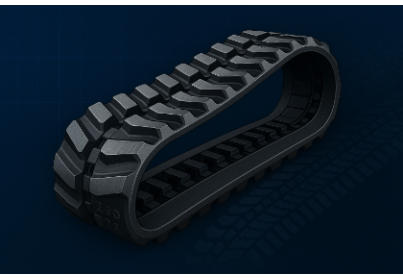 How to Correctly Measure and Read a Rubber Track Size? A Step-by-Step Guide.
Buying the wrong tracks is a costly mistake. Our simple, step-by-step guide will teach you how to independently...
Read more
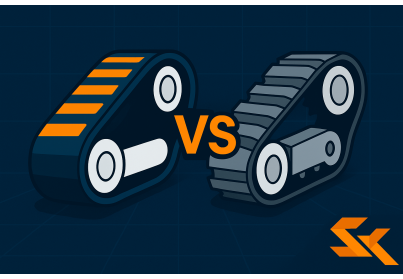 Rubber Tracks vs. Steel Tracks? A Guide to Choosing the Best for Your Machine
Choosing between rubber and steel tracks is a key decision that affects costs and work efficiency. Learn the key...
Read more
 Anatomy of a Tracked Undercarriage – Get to Know Rollers, Sprockets, Idlers, and Chains
If the engine is the heart of a machine, the undercarriage is its legs. Understanding its construction is key to...
Read more
WE OFFER PRODUCTS OF THE BEST BRANDS



















SERWIS KOP Sp. z o.o. Sp.k.
ul. Podkarpacka 57A, 35-082 Rzeszów
NIP: 813-352-97-49 REGON: 180286726
Opening hours
Telephone support - Monday - Friday (8:00 AM – 5:00 PM)
Order pick-up - Monday - Friday (8:00 AM – 4:30 PM)
Email
[email protected]
[email protected]
Gadu-Gadu communicator
GG: 4185846 - Daniel
ul. Podkarpacka 57A, 35-082 Rzeszów
NIP: 813-352-97-49 REGON: 180286726
Opening hours
Telephone support - Monday - Friday (8:00 AM – 5:00 PM)
Order pick-up - Monday - Friday (8:00 AM – 4:30 PM)
[email protected]
[email protected]
Gadu-Gadu communicator
GG: 4185846 - Daniel
Phone
+48 17 864 31 00
+48 17 864 00 24
+48 17 864 25 96
Mobile phone
+48 607-700-547
+48 695-944-818
+48 691-330-531
+48 690-906-751
Fax
+48 17 864 31 20
+48 17 864 31 00
+48 17 864 00 24
+48 17 864 25 96
Mobile phone
+48 607-700-547
+48 695-944-818
+48 691-330-531
+48 690-906-751
Fax
+48 17 864 31 20