-


-


-
 ALL CATEGORIES
-
-
-
-
-
-
SLEW SYSTEM
-
-
-
-
-
AXLES
- TIE RODS
- KIT SPIDER FOR DRIVE SHAFTS
- DIFFERENTIAL
- MOUNT THE KNUCKLE
- KIT SPIDER FOR AXLE SHAFTS
- HUB / GEAR REDUCTION
- PROPSHAFTS
- SOLENOID VALVES / COILS
- FLANGES / COUPLING YOKES
- BEARINGS
- BUSHES / WASHERS MOUNT AXLE
- AXLE / DIFFERENTIAL HOUSING
- DRIVESHAFTS / CENTER JOINTS
- BOLTS / NUTS / STRAPS
- LOCK / CIRCLIP / CLIP
- CROWN WHEEL AND PINIONS
- SEALS
- OTHERS
-
-
-
-
-
-
-
-
ENGINE
-
-
-
-
-
COILS / SOLENOID VALVES
-
SWIVELS / TURNING JOINTS
-
PUMPS / STEERING VALVES / MOTORS
-
-
-
VALVES
-
HYDRAULIC HOSES / PIPES
-
RAMS
-
ACCUMULATORS
-
QUICKHITCHES
-
-
-
BOLTS / NUTS / WASHERS
-
PUMP DRIVESHAFTS
-
SEALS VALVES / PUMPS
-
OTHERS
-
-
-
-
-
-
-
TIMING
-
EQUIPMENT
-
-
LUBRICATION SYSTEM
-
-
INDUCTION / EXHAUST SYSTEM
-
SEALS / GASKET SETS
-
ENGINE MOUNTING
-
SERVICE TOOLS
-
-
-
-
-
-
STABILIZERS
-
-
-
-
-
-
FUSES / FUSE BOXES
-
RELAYS / FLASHERS
-
REVERSE ALARM
-
-
HEATERS / BLOWERS
-
BATTERY ISOLATER SWITCH
-
-
-
-
-
OILS
-
FLUIDS
-
-
-
PAINTS
-
-
-
-
-
-
-
GLASS / CAB GLAZING
-
-
-
RUBBER SEALS - GLASS
-
ASSEMBLY KITS / ADHESIVES
-
-
-
-
-
ADAPTERS
-
BOLTS / LOCKS
-
-
-
-
HYDRAULIC INSTALLATIONS
-
TOEPLATES
-
TOOTH RIPPER
-
-
-
HYDRAULIC HAMMERS / TOOLS
-
PLOWS
-
QUICKHITCHES
-
FORKS
-
-
-
EARTH DRILL / AUGER
-
SWEEPER / COMPONENTS
-
SWINGOTILT / PLATFORMS
-
-
-
-
-
ACCESSORIES
-
DECAL / STICKERS
-
-
-
GADGETS
-
CLOTHES
-
FAN ZONE
-
-
-
 BODYWORK
 UNDERCARRIAGE
 TRANSMISSION / AXLES / WHEELS
 STEERING / CONTROL
 HYDRAULICS
 BRAKES
 ENGINE
 ARMS / SWING / STABILIZERS
 ELECTRICS
 OILS / FLUIDS / LUBRICANTS / PAINTS
 FILTERS
 GLASS / CAB GLAZING
 TEETH / ADAPTORS / PIN LOCKS
 ATTACHMENTS
 ACCESSORIES / TOOLS

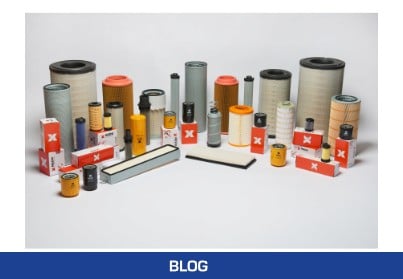


Common Rail Fuel Filtration: The Role of Water Separators and Filters in Protecting Injectors
Common Rail Fuel Filtration: The Role of Water Separators and Filters in Protecting Injectors
Why Isn't a "Regular" Fuel Filter Enough Anymore?
Long gone are the days when a simple diesel engine in a backhoe loader could "burn anything." Those old units, based on inline or rotary pumps, operated at injection pressures around 200-300 bar. Today's JCB, CAT, Volvo, or Komatsu machines, in order to meet Stage V emissions standards, are equipped with Common Rail (CR) systems. In these systems, fuel is pressurized to unimaginable levels, often exceeding 2000 bar (over 29,000 PSI). The components—injectors and high-pressure pump plungers—are machined with tolerances of 2-3 microns (thousandths of a millimeter). For comparison, a human hair is about 70 microns thick. In such a precision system, the fuel is both the working fluid and the lubricant. The slightest contaminant is no longer just "dirt"—it's a tool of destruction, leading to repairs costing tens of thousands.
Anatomy of Contamination: The Three Enemies of Your Injection System
To understand why filtration systems are so complex, we must know our enemies. We're not just fighting "dirt."
1. Water – Public Enemy Number One
Where does it come from? It enters the fuel at every stage: from the refinery, during transport, and right into your machine's tank. Most often, it's a result of condensation – temperature changes cause water vapor to condense on the empty walls of the fuel tank. The less fuel in the tank, the more space for condensation.
What does it do? Water is lethal to a CR system for three reasons:
- Corrosion: It rusts the precision components of the pump and injectors. Microscopic rust flakes then become secondary abrasive contaminants.
- Lack of Lubrication: Water displaces the fuel's lubricating film, leading to the seizure of plungers and injector needles (metal-on-metal friction).
- Microbial Growth: At the water-fuel interface in the tank, bacteria and fungi grow, creating a "jelly" that clogs filters and the entire system.
2. Particulates (Abrasives)
This includes sand, dust, rust from storage tanks, and metal shavings generated within the system (e.g., from a failing pump). Particles harder than steel (like silica, i.e., sand) act like sandpaper, instantly destroying injector nozzles and causing them to "leak," which in a worst-case scenario ends with a hole burned through a piston.
3. Paraffin (The Winter Problem)
In cold temperatures, paraffin wax crystals precipitate out of diesel fuel. They don't destroy the pump, but they effectively clog filters, forming a waxy coating that blocks fuel flow and immobilizes the machine.
The Principle of Multi-Stage Protection: Why One Filter Isn't Enough?
A filter that could catch everything (both water and 2-micron particles) would clog within minutes of operation. That's why machine manufacturers use multi-stage filtration, where each element has a different job:
- Stage 1: Water Separator (Protects against corrosion and lack of lubrication)
- Stage 2: Primary Filter (Protects the low-pressure fuel pump)
- Stage 3: Final Filter (Protects the high-pressure pump and injectors)
Part 1: The Water Separator – Guardian Number One
This is the single most important element of the entire system. It is always installed first in the suction line, between the fuel tank and the primary pump. Its job is not precision filtration, but to capture the biggest enemy – water.
How Does a Separator Work? The Magic of Coalescing
Most separators work on the principle of coalescence. Fuel flows through a special media that doesn't absorb water but causes microscopic water droplets to merge into larger, heavier drops. Since water is heavier than diesel, these large drops fall by gravity to the bottom of a transparent collection bowl, while the clean, lighter fuel flows on to the system.
Water Separator Diagnostics and Service
The separator is the only filter that requires daily inspection.
- Daily Inspection: Before starting the machine, the operator must visually check the clear bowl. If water has collected at the bottom (often visible as a separate layer or "jelly"), it must be drained immediately.
- Draining Water: With the engine off, loosen the drain valve at the bottom of the bowl and drain the contents into a container until clean fuel flows out. Then, tighten the valve securely.
- Water-In-Fuel (WIF) Sensor: Modern machines are equipped with a WIF sensor. When the water level in the bowl reaches the alarm point, a light will illuminate on the dash. Never ignore this light! Stop the machine immediately and drain the separator. Continuing to run risks sucking water into the pump.
Anatomy of Neglect: What Happens If You Don't Drain the Water?
If the bowl fills up, the fuel pump will begin to suck a mixture of water and fuel. This mixture will hit the primary filter. The filter media is not designed to stop this much water and will let it pass. The water will reach the high-pressure pump, causing corrosion and a lack of lubrication, which begins the "metal-making" process. From there, it's a direct path to destroying the injectors. The cost of repair is in the tens of thousands. The cost of a daily check – 30 seconds of the operator's time.
Part 2: The Primary Filter – Protecting the Lift Pump
After the separator has removed the water, the fuel moves to the primary filter. Its role is often confused with the final filter, but its job is completely different and just as critical.
How It Works and What It Protects
Rating: This is a medium-micron filter, typically in the 10 to 30-micron range.
Main Purpose: Its job is not to protect the injectors, but to protect the electric low-pressure lift pump. This pump is the first precision component in the system. It is extremely sensitive to larger contaminants like rust from the tank, sand, or paraffin. The primary filter catches these "coarse" particles before they destroy the lift pump.
Location: In modern machines like the JCB 3CX with a Dieselmax engine, the primary filter is very often integrated into the same housing as the water separator. In CAT machines (e.g., 428E, 432F2), it often appears as a separate spin-on canister near the engine.
Anatomy of Failure: What Happens When the Primary Filter Fails?
Neglecting to change the primary filter leads to it clogging. The consequences are twofold:
1. Pump Starvation: A clogged filter creates immense restriction. The electric lift pump, trying to suck fuel, works under extreme load, leading to it overheating and seizing.
2. The Domino Effect: The failing, seizing lift pump begins to generate its own metal shavings. These shavings, if not caught by the final filter, travel directly to the high-pressure (CR) pump, destroying it. This is how a €20 filter failure leads to a €5,000 repair.
Part 3: The Final (Secondary) Filter – The Last Guard for the Injectors
This is the "hero" of the Common Rail system. The final filter (or secondary filter) is the last and most important bastion protecting the most expensive components: the high-pressure pump and the injectors.
Absolute Precision: The Magic of Microns
Rating: Final filters for CR systems are feats of engineering. Their filtration capability is 2 to 5 microns. How small is that? A human hair is about 70 microns. A single bacterium is 3-5 microns. This filter must trap particles that are absolutely invisible to the naked eye.
What it protects: It protects components with tolerances of 2-3 microns. In an injector in a Komatsu PC210 or Volvo EC220, the valve needle must move thousands of times per minute. A single, hard 5-micron particle that gets between the needle and its seat acts like a grain of sand in a watch – it scores the surface, causes a leak, and leads to a "leaking" injector, which in the worst-case scenario ends with a hole burned in a piston.
Anatomy of a Filter: Why a Cheap Filter is a False Economy
Two filters with the same external dimensions can have drastically different performance. The difference is inside.
Anatomy of Neglect: Cheap Filter vs. REDX Filter
- Filter Media: Cheap filters use plain paper (cellulose). Premium media, like that in REDX filters, uses multi-layer synthetic (melt-blown) media. This has much higher efficiency at capturing 2-5 micron particles and is resistant to water (paper swells and loses its properties).
- Surface Area: For a filter to last, it must have a high dirt-holding capacity. A cheap filter has very little media, loosely packed. A REDX filter is packed with precision-pleated media, providing a huge surface area. It doesn't clog after 100 hours but lasts the full service interval (e.g., 500 hours).
- Bypass Valve: The worst-case scenario. When a cheap filter clogs quickly, its bypass valve opens, sending all the fuel around the filter media, completely unfiltered, straight to the pump and injectors. It is better for the machine to stop (which a filter without a bypass would do) than to run on dirty fuel.
- Seals and Housing: Cheap filters have poor-quality seals that harden and leak, allowing "false" air to be sucked in, which causes hard starting and low power.
Using a high-quality REDX filter is the only guarantee that the 2-micron protection your Common Rail engine in a JCB 3CX EcoMAX or CAT 432F2 requires is provided for the entire service interval.
Part 4: Service Best Practices – How to Protect Your System
Simply replacing filters isn't enough. The most important thing is prevention – stopping contaminants from entering the system in the first place.
Rules That Save Injectors:
- Refuel from a Clean Source: Avoid fuel from barrels. Use only trusted stations or suppliers who guarantee fuel cleanliness.
- Fill the Tank at the End of the Day: This is the most important preventive rule. Leaving a machine overnight with a half-empty tank is an invitation for water. Water vapor will condense on the cold tank walls and settle at the bottom. By filling the tank "to the brim," you minimize empty space and prevent condensation.
- Drain the Water Separator Daily: This is a mandatory part of the daily operator check. It takes 30 seconds and saves the system from corrosion and lack of lubrication.
- Maintain Absolute Cleanliness When Changing Filters: This is a critical moment. Before unscrewing a filter, thoroughly clean the entire filter head and surrounding area with compressed air and a clean cloth. Even one grain of sand that falls into the system can destroy an injector. Work with clean gloves.
- Never pre-fill a new filter "from a can": Pre-filling the filter canister is a common mistake. You are pouring unfiltered fuel directly into the "clean" side of the system. When you start the engine, all that dirt goes straight to the pump and injectors.
- Prime the System with the Hand Pump: After replacing the filters, use the manual priming pump (if the machine has one, e.g., in many Perkins or JCB engines) to fill the system and bleed the air until you feel firm resistance.
FAQ - Frequently Asked Questions
1. How often should I replace fuel filters?
Always follow the service interval specified by the machine manufacturer –
Related posts
 Doosan — excavators, loaders, ADTs: history, models, spare parts
Doosan — brand history, DX/DL/DA families, extended model list and spare parts offer. VIN-based matching. Call: +48...
Read more
 Ecomat — compact skid steers & articulated loaders: history, models, spare parts
Ecomat — Italian compact loaders. Brand story, ES/ET/EL series, popular models and our spare parts offer. VIN/model...
Read more
 Eurocomach — mini/midi excavators & compact track loaders: history, models, spare parts
Eurocomach — Italian mini/midi excavators and compact track loaders. Explore brand history, popular ZT/TR/UR models...
Read more
 Fermec — backhoe loaders: history, models, spare parts
Fermec — the MF/Coventry legacy. Explore brand history, 700/800/900 series, popular models and our aftermarket parts....
Read more
 AGCO Power (Sisu): Finnish Power and Legendary Reliability
Explore the history and power of Finnish AGCO Power engines, formerly Sisu. From legendary, indestructible units to...
Read more
WE OFFER PRODUCTS OF THE BEST BRANDS



















SERWIS KOP Sp. z o.o. Sp.k.
ul. Podkarpacka 57A, 35-082 Rzeszów
NIP: 813-352-97-49 REGON: 180286726
Opening hours
Telephone support - Monday - Friday (8:00 AM – 5:00 PM)
Order pick-up - Monday - Friday (8:00 AM – 4:30 PM)
Email
[email protected]
[email protected]
Gadu-Gadu communicator
GG: 4185846 - Daniel
ul. Podkarpacka 57A, 35-082 Rzeszów
NIP: 813-352-97-49 REGON: 180286726
Opening hours
Telephone support - Monday - Friday (8:00 AM – 5:00 PM)
Order pick-up - Monday - Friday (8:00 AM – 4:30 PM)
[email protected]
[email protected]
Gadu-Gadu communicator
GG: 4185846 - Daniel
Phone
+48 17 864 31 00
+48 17 864 00 24
+48 17 864 25 96
Mobile phone
+48 607-700-547
+48 695-944-818
+48 691-330-531
+48 690-906-751
Fax
+48 17 864 31 20
+48 17 864 31 00
+48 17 864 00 24
+48 17 864 25 96
Mobile phone
+48 607-700-547
+48 695-944-818
+48 691-330-531
+48 690-906-751
Fax
+48 17 864 31 20