 BODYWORK
 UNDERCARRIAGE
 TRANSMISSION / AXLES / WHEELS
 STEERING / CONTROL
 HYDRAULICS
 BRAKES
 ENGINE
 ARMS / SWING / STABILIZERS
 ELECTRICS
 OILS / FLUIDS / LUBRICANTS / PAINTS
 FILTERS
 GLASS / CAB GLAZING
 TEETH / ADAPTORS / PIN LOCKS
 ATTACHMENTS
 ACCESSORIES / TOOLS




 ALL CATEGORIES
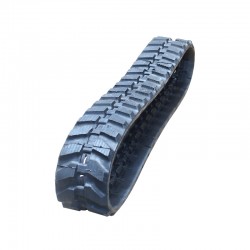
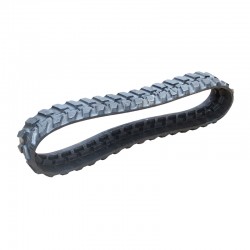
| Brand | Model |
|---|---|
| CATERPILLAR | 300.9D |
| CMC | S15 |
| HITACHI | ZX8.2 |
| KUBOTA | K008.3, U008.3 |
| YANMAR | SV08, SV08.1, SV09 |
| YUCHAI | YC08-8 |
The list above is for reference only. Always verify the size on your old track before purchasing.
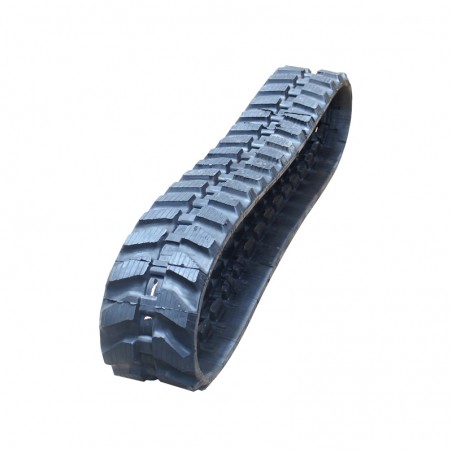
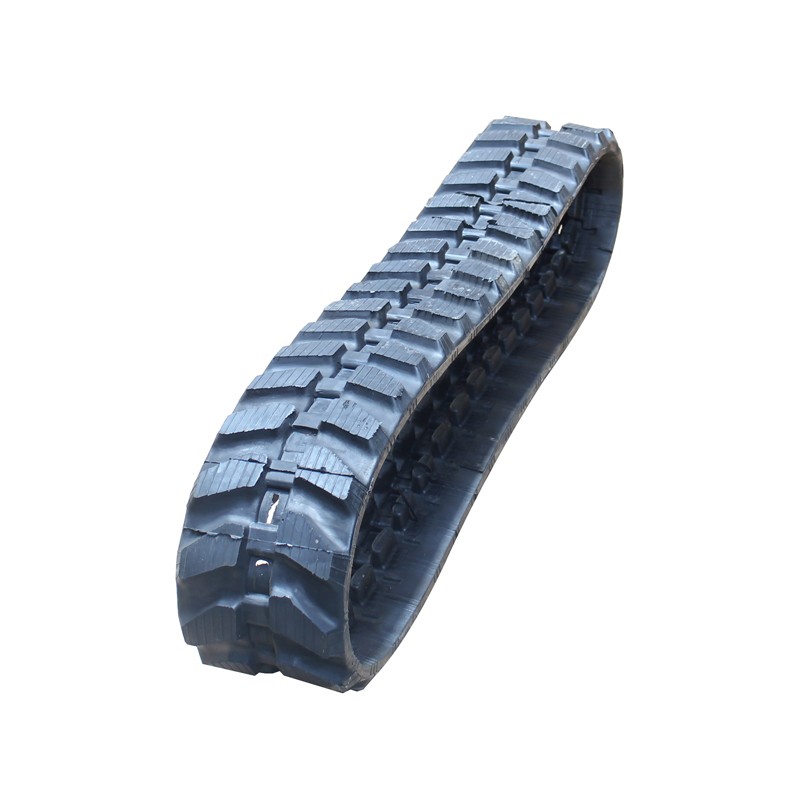
A rubber track is a key component of the undercarriage that provides the machine with traction, stability, and mobility. If your track is cracked, has deep tears, is missing steel links, falls off the wheels, or cannot be tensioned correctly, these are classic signs of wear. Continuing to operate on a damaged track not only risks immobilizing the machine but also damaging much more expensive undercarriage components, such as sprockets, idlers, and track rollers.
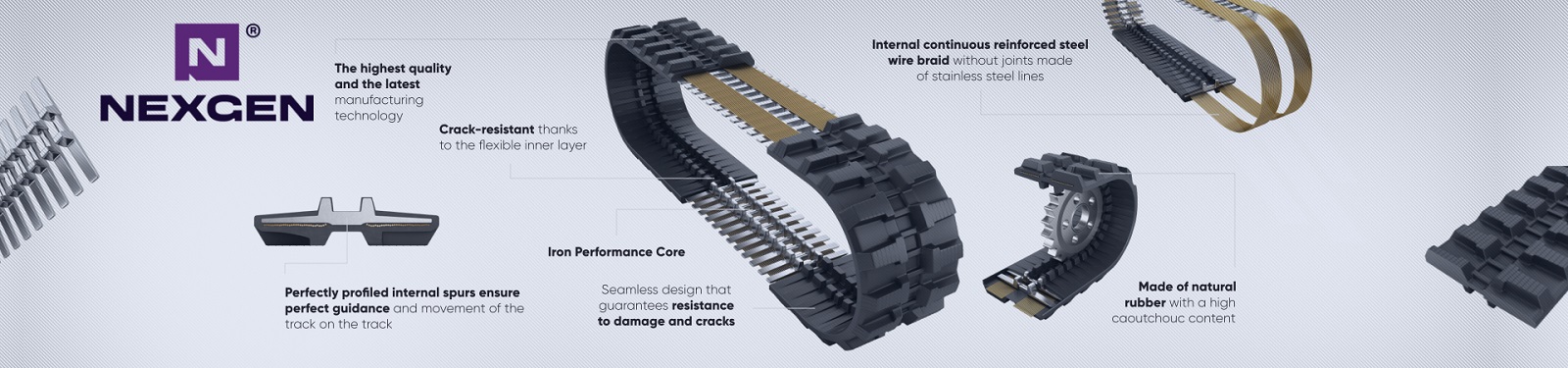
The undercarriage is the backbone of any tracked machine – its durability determines the stability, traction, and continuity of your work. The failure of a single component means costly downtime. That's why our offer includes only tracks that combine innovative technology with uncompromising durability to provide your machine with a solid foundation you can rely on.
Key technologies and advantages of our tracks:
| ✔ | Advanced Rubber Compound: The tracks are made from the highest quality rubber with the addition of natural rubber. The flexible inner layer works perfectly with the running gear, while the reinforced and hardened outer shell guarantees extreme resistance to mechanical damage and abrasion. |
| ✔ | Reinforcement with Steel Cords: Inside each track, there is a dense, steel braid that increases tensile strength by up to 50% compared to standard models on the market. This ensures ideal tension and prevents the track from derailing. |
| ✔ | Seamless Construction: Unlike many replacements, our tracks are produced using seamless technology. Eliminating the weakest point – the joint – drastically reduces the risk of cracking and tearing, even under extreme loads. |
| ✔ | Precise Inner Profile: Perfectly profiled internal lugs guarantee smooth and quiet track guidance. The rollers, idlers, and sprockets move without resistance, which reduces wear on the entire undercarriage. |
By choosing our tracks, you invest in maximum undercarriage life, reduced downtime, and the certainty that your machine has a foundation you can rely on.
| 1. | Always Replace Tracks in Pairs
This ensures even wear of the undercarriage and machine stability. Installing one new and one old track leads to uneven tension and faster wear of the new part. |
| 2. | Check Other Undercarriage Components
Before installing new tracks, be sure to check the condition of the sprockets and track rollers. **Pay close attention to the idlers – worn ones with sharp edges can quickly cut or destroy a new track.** |
| 3. | Set the Correct Tension
After installation, set the correct track tension according to the machine's operating manual. A track that is too loose can derail, while one that is too tight damages the bearings. |
| 4. | Avoid Driving Over Sharp Edges
Avoid turning on sharp stones, curbs, or rebar that can cut the rubber and damage the internal braid. |
Answer: Yes. An old, stretched track is unable to maintain proper tension. However, you should also check the condition of the sprocket teeth and roller guides, which are also responsible for keeping the track in place.
Question: How do I read the track size?Answer: The size (e.g., 180x72x37K) is usually embossed on the inner side of the track. It stands for: 180mm (width), 72mm (pitch), 37 (number of links), K (specific guiding type).
Question: What is the main cause of track cracking?Answer: The most common causes are natural material fatigue, mechanical damage from sharp objects, operating on worn sprockets, or excessive track tension.
💪
Extreme Durability
Long lifespan in tough conditions
🚜
Excellent Traction
Confident driving on any terrain
🤫
Smooth and Quiet Operation
Operator comfort and undercarriage protection
A. How to Properly Measure a Track?
If a track has no markings, its size can be easily determined using three measurements. The size format is always Width x Pitch x Number of Links (e.g., 230x48x66).
B. Short Pitch vs. Long Pitch
Some track sizes are available in two variants that are often interchangeable.
Rule: A short pitch track (e.g., 230x48x66) is interchangeable with a long pitch track (e.g., 230x96x33) if its pitch is 2x smaller and the number of links is 2x larger.
Operation: In a short pitch track, each sprocket tooth engages a separate link, ensuring a smoother ride. In a long pitch track, every other link is engaged.
| Feature | Short Pitch (e.g., 230x48x66) | Long Pitch (e.g., 230x96x33) |
|---|---|---|
| Ride Comfort | ✅ High - Less vibration, smoother operation. | ⚠️ Lower - The ride can be rougher and louder. |
| Durability | Potentially lower, more moving parts. | ✅ Often higher - Fewer metal links, simpler construction. |
| Price | Usually higher (more steel in the track). | ✅ Usually lower (less material usage). |
The tread pattern has a crucial impact on traction, operator comfort, and ground protection. The choice depends on the dominant working environment.
Pitch: Must be perfectly matched to the sprocket. An incorrect pitch will cause the chain to skip and destroy both components.
Engagement Type: In construction machinery, the standard is conventional (external) engagement, where the sprocket teeth make contact with the metal bushings in the track links.
A. Track Rollers (Bottom) – Type A
Type A1 (Center Guide / Single Flange)
Description: A roller with a single, centrally located flange.
Function: The flange runs in the center of the track chain, centering it on the undercarriage.
Application: The most common type, forming the basis of most guiding systems.
Type A2 (Outer Guide / Double Flange)
Description: A roller with two flanges located on the outer edges.
Function: The track chain links move between these two flanges, which prevents the track from derailing.
Application: Used in conjunction with A1 rollers for maximum stability, especially at the ends of the undercarriage.
Type A0/A3 (Flangeless Roller / No Flange)
Description: A roller with a completely smooth rolling surface.
Function: Only supports weight; guidance is provided by adjacent flanged rollers.
Application: Rarely seen, mainly in very large machines.
B. Carrier Rollers (Top) – Types B, C, D
Their job is to support the upper, slack section of the track.
Types B (Inner Chain Guide): Equivalents of A1 and A2 rollers, but for the upper section of the undercarriage.
Type C2 (Outer Chain Guide): A roller with two treads, supporting the chain on its outer elements.
Type D1 (Wide Groove Guide): A roller with a wide groove in which the entire chain link is "hidden".
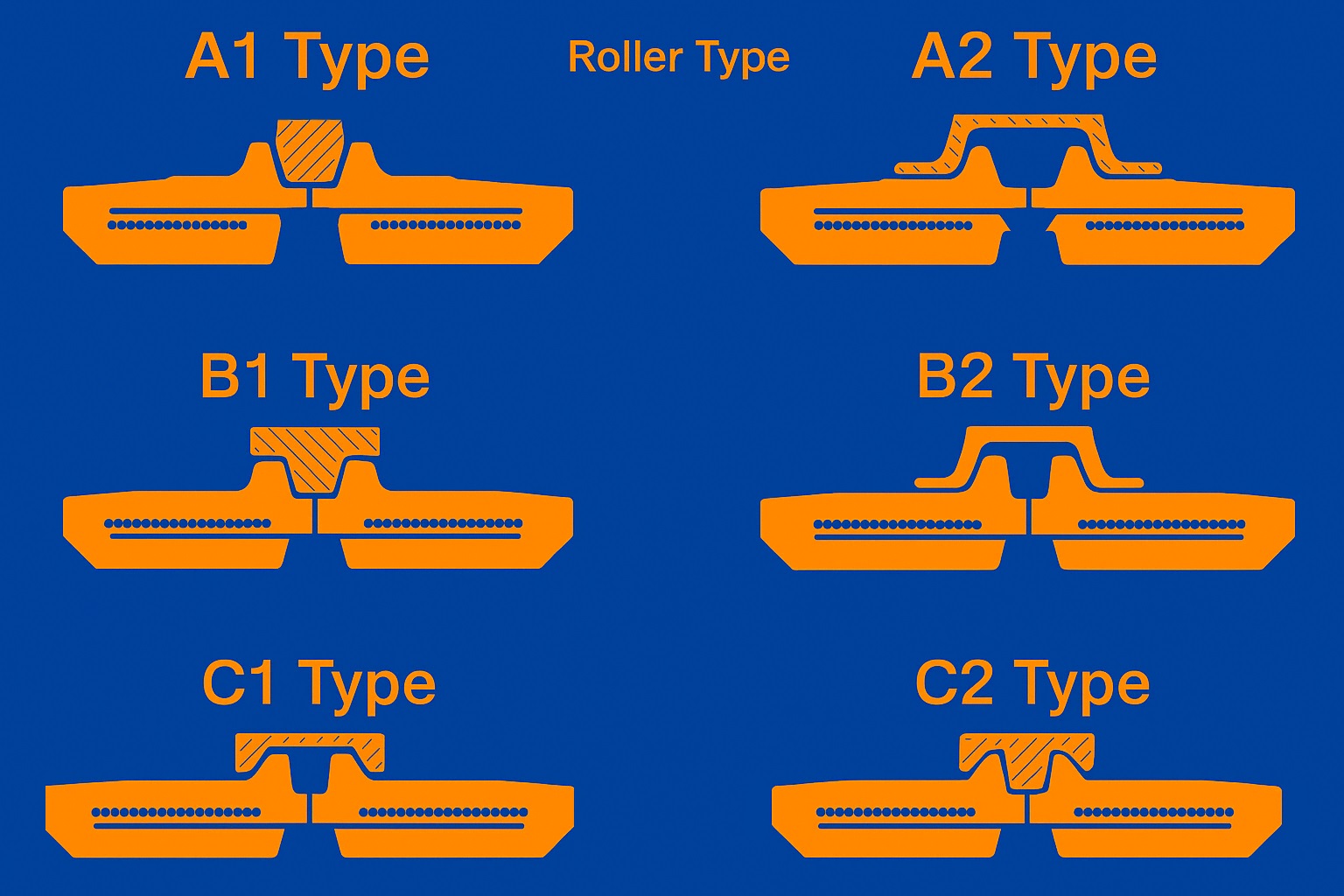
The letter at the end of the size (e.g., ...W) defines its internal guiding system.
Question: Why does my track keep derailing?
Answers: Loose tension (most common cause), extremely worn sprocket teeth, a worn idler, seized or worn track rollers, operating on steep slopes.
Question: What causes premature track cracking?
Answers: Excessive tension, impact with a sharp edge, operating with rocks jammed in the undercarriage, rubber aging (perishing), regular contact with oils.

If you are unsure whether the product you have chosen will be suitable for your machine, contact us and we will select the right part and provide practical advice in a few minutes.

Data sheet
Specific References
Manufacturer
Responsible person
See also similar products
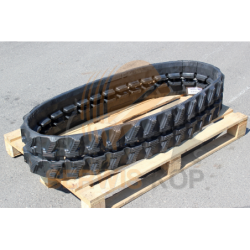
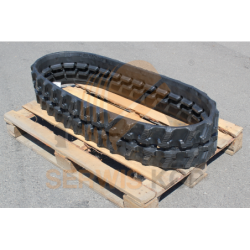


Suitable for Kubota K008-3, Yanmar SV08, Hitachi ZX08-2