-


-


-
 ALL CATEGORIES
-
-
-
-
-
-
SLEW SYSTEM
-
-
-
-
-
AXLES
- TIE RODS
- KIT SPIDER FOR DRIVE SHAFTS
- DIFFERENTIAL
- MOUNT THE KNUCKLE
- KIT SPIDER FOR AXLE SHAFTS
- HUB / GEAR REDUCTION
- PROPSHAFTS
- SOLENOID VALVES / COILS
- FLANGES / COUPLING YOKES
- BEARINGS
- BUSHES / WASHERS MOUNT AXLE
- AXLE / DIFFERENTIAL HOUSING
- DRIVESHAFTS / CENTER JOINTS
- BOLTS / NUTS / STRAPS
- LOCK / CIRCLIP / CLIP
- CROWN WHEEL AND PINIONS
- SEALS
- OTHERS
-
-
-
-
-
-
-
-
ENGINE
-
-
-
-
-
COILS / SOLENOID VALVES
-
SWIVELS / TURNING JOINTS
-
PUMPS / STEERING VALVES / MOTORS
-
-
-
VALVES
-
HYDRAULIC HOSES / PIPES
-
RAMS
-
ACCUMULATORS
-
QUICKHITCHES
-
-
-
BOLTS / NUTS / WASHERS
-
PUMP DRIVESHAFTS
-
SEALS VALVES / PUMPS
-
OTHERS
-
-
-
-
-
-
-
TIMING
-
EQUIPMENT
-
-
LUBRICATION SYSTEM
-
-
INDUCTION / EXHAUST SYSTEM
-
SEALS / GASKET SETS
-
ENGINE MOUNTING
-
SERVICE TOOLS
-
-
-
-
-
-
STABILIZERS
-
-
-
-
-
-
FUSES / FUSE BOXES
-
RELAYS / FLASHERS
-
REVERSE ALARM
-
-
HEATERS / BLOWERS
-
BATTERY ISOLATER SWITCH
-
-
-
-
-
OILS
-
FLUIDS
-
-
-
PAINTS
-
-
-
-
-
-
-
GLASS / CAB GLAZING
-
-
-
RUBBER SEALS - GLASS
-
ASSEMBLY KITS / ADHESIVES
-
-
-
-
-
ADAPTERS
-
BOLTS / LOCKS
-
-
-
-
HYDRAULIC INSTALLATIONS
-
TOEPLATES
-
TOOTH RIPPER
-
-
-
HYDRAULIC HAMMERS / TOOLS
-
PLOWS
-
QUICKHITCHES
-
FORKS
-
-
-
EARTH DRILL / AUGER
-
SWEEPER / COMPONENTS
-
SWINGOTILT / PLATFORMS
-
-
-
-
-
ACCESSORIES
-
DECAL / STICKERS
-
-
-
GADGETS
-
CLOTHES
-
FAN ZONE
-
-
-
 BODYWORK
 UNDERCARRIAGE
 TRANSMISSION / AXLES / WHEELS
 STEERING / CONTROL
 HYDRAULICS
 BRAKES
 ENGINE
 ARMS / SWING / STABILIZERS
 ELECTRICS
 OILS / FLUIDS / LUBRICANTS / PAINTS
 FILTERS
 GLASS / CAB GLAZING
 TEETH / ADAPTORS / PIN LOCKS
 ATTACHMENTS
 ACCESSORIES / TOOLS

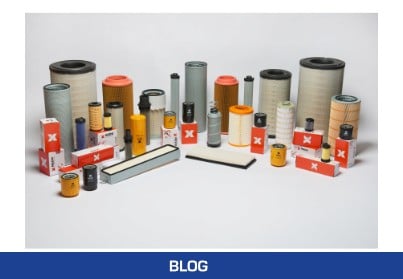


Dust – The Silent Engine Killer: A Complete Guide to Air Filtration (Pre-Cleaner, Primary, & Safety Filters)
Dust – The Silent Engine Killer: A Complete Guide to Air Filtration
The Lethal Mix: Air and Dust
A diesel engine in a construction machine is a massive air pump. To burn 1 liter of diesel fuel, it needs approximately 15,000 liters of air. Now imagine a CAT 320 excavator working on a construction site on a dry summer day—the machine is surrounded by a cloud of dust, sand, and fine grit. These particles, mostly silica, are harder than the steel your engine is made of. If they were to get inside, they would act like a grinding paste, destroying cylinder liners, piston rings, and turbocharger bearings within a few dozen hours. A failure in the air filtration system is the fastest and most effective way to permanently destroy an engine worth a fortune. In this complete guide, we will analyze how a modern, multi-stage air filtration system is built and why every single component is absolutely critical.
Anatomy of the Air Intake System: A Multi-Stage Barrier
Modern construction machines, like JCB 3CX EcoMAX backhoes or Volvo loaders, never rely on a single filter. They use a multi-stage system where each successive element traps finer particles:
- Stage 1: Pre-Cleaner: Mounted on top of the "stack" (intake snorkel). Its job is to separate the largest contaminants (leaves, insects, coarse dust) before they even reach the main filter housing.
- Stage 2: Filter Housing: Often acts as a cyclone separator. The air is forced into a spiral motion, and heavier dust particles are thrown against the walls by centrifugal force, falling into a rubber ejector valve (or "duckbill").
- Stage 3: Primary (Outer) Filter: This is what does 99% of the actual filtration work, trapping fine dust down to a few microns.
- Stage 4: Safety (Inner) Filter: The engine's insurance policy. Its role is critical and often misunderstood.
Between the last filter and the turbocharger, there is only a filter restriction indicator (if equipped) and sealed intake piping. This entire system must be 100% airtight.
Part 1: The Primary (Outer) Filter – The Filtration Workhorse
This is the large, pleated element that first comes to mind when we say "air filter." Its job is to physically trap the fine dust that got past the pre-filtration stages. Its quality, however, is not determined by its appearance, but by the quality of its filter media.
Anatomy of a Filter Cartridge: Why a Cheap Filter is a False Economy
Two filters with identical external dimensions can have drastically different lifespans and efficiencies. The difference is inside:
- Filter Media: Cheap filters use plain, thick cellulose (paper). Premium filters, use specialized cellulose or synthetic (like PowerCore) media. They are designed to hold an electrostatic charge, actively attracting fine dust particles rather than just mechanically blocking them.
- Surface Area (Pleat Count): This is a key parameter. A cheap filter has few, widely spaced pleats. It clogs quickly and creates high restriction. A high-quality REDX filter has the maximum number of tightly packed pleats, providing a huge surface area. This allows it to hold much more dust while maintaining low restriction, which translates to a longer service life and lower fuel consumption.
- Structural Stability: In cheap filters, the pleats are held with weak glue and no reinforcement. Under air pulsation and humidity, the pleats can "bunch" or deform, drastically reducing the working surface. Premium filters use hot-melt stabilization beads and strong metal mesh (inner and outer) to maintain the filter's geometry under the harshest conditions.
Anatomy of Neglect: The Clogged Primary Filter
When the primary filter is clogged, the engine begins to "choke." It cannot draw in enough air for combustion. The effects are immediate: a drastic loss of power, increased fuel consumption, and black smoke (unburned fuel). Ignoring the filter restriction indicator is asking for trouble.
Part 2: The Safety (Inner) Filter – The Engine's Insurance Policy
Inside the primary filter sits a smaller, second element – the safety filter. Its role is notoriously misunderstood. Many operators think it's a "second, finer stage of filtration." This is wrong.
What is the True Role of the Safety Filter?
The safety filter is not designed to filter air during normal operation. The primary filter does all that work. The safety filter is the last line of defense that activates in two critical situations:
- During Primary Filter Service: When a mechanic removes the old, dirty primary filter, there is a huge risk that dust, a leaf, or a clump of dirt will fall from the housing into the "clean" side of the intake. At this precise moment, the safety filter physically blocks these contaminants, protecting the engine and turbocharger.
- In Case of Catastrophic Primary Filter Failure: If the primary filter cracks, tears, or deforms (which can happen with low-quality cartridges), the safety filter is the only thing standing between the engine and a cloud of dust.
The Critical Service Error: Removing the Safety Filter
Many mechanics remove the safety filter "to get it out of the way" while changing the primary. This is asking for trouble. The safety filter should be removed VERY RARELY – typically every third primary filter change, or as per the manufacturer's recommendation. It should never be cleaned or blown with air. It is a disposable item. Removing it opens a direct path to the engine for any dust that accidentally falls into the housing.
Part 3: Pre-Filtration – How to Extend the Life of Your Main Filter?
The primary filter is expensive, and its life is finite. That's why engineers use systems that remove the majority of contaminants before they even reach the filter housing.
- Cyclone Separator (in the housing): Most modern filter housings (e.g., in JCB 3CX or CAT 432 machines) have specially shaped inlets that force the incoming air into a spiral. Heavier dust particles are thrown to the outer walls by centrifugal force, where they fall to the bottom.
- Ejector Valve ("Duckbill"): This is the small rubber valve at the bottom of the filter housing. The dust collected by the cyclone gathers here. The slight vacuum in the intake system keeps the "duckbill" sucked shut, but engine vibrations and air pulses cause it to flap open periodically, automatically ejecting the accumulated dirt. A faulty (cracked or clogged) ejector valve is a serious problem – it either fails to eject dirt or sucks in unfiltered air.
- Pre-Cleaner (Bowl Type): Used in machines operating in extremely dusty conditions (like Komatsu dozers in a quarry). This is a large, clear "bowl" mounted on top of the intake snorkel. It uses centrifugal force to separate up to 90% of heavy dust, which collects in the bowl before the air ever gets to the main filter.
Anatomy of a Failure: "Dusting" – The Silent Engine Killer
"Dusting" or a "dusted engine" is the workshop term for engine destruction caused by unfiltered air (dust) entering the intake system. It is one of the most insidious and irreversible failures. It doesn't happen suddenly – it's a slow process that turns an engine into scrap metal.
How Does "Dusting" Happen?
The source is a leak in the intake system AFTER the primary filter. The most common causes are:
- Improperly installed primary filter (seated crooked, damaged gasket).
- A cracked or badly seated safety filter gasket.
- A cracked or loose rubber hose between the filter housing and the turbocharger.
- A leak in the intercooler or its connections.
- A ruptured ejector valve ("duckbill") on the filter housing.
What Does Dust Do Inside an Engine? A Step-by-Step Analysis
Even a small leak acts like a vacuum cleaner, sucking dust and sand (silica) straight into the engine.
1. Turbocharger Destruction: The dust first hits the turbo's compressor wheel, spinning at 150,000 RPM. It acts like a sandblaster, eroding and sand-blasting the edges of the blades. The rotor loses its balance, and the compressor's efficiency plummets. In a short time, the bearings fail, and the turbo seizes.
2. Cylinder Liner Destruction: Dust that survives the turbo enters the cylinders and gets trapped between the piston and the cylinder wall. It mixes with the oil to form an abrasive paste that polishes the cylinder liner to a mirror finish, destroying the cross-hatch pattern responsible for holding the oil film.
3. Piston Ring Destruction: The dust packs into the piston ring grooves, causing the rings to stick, and acts like a file, grinding down their edges. The engine loses compression.
4. Valve Destruction: Hard particles get trapped between the valve and the valve seat, causing "blow-by" and burning out the valve.
The Final Symptoms: A dramatic loss of power, massive oil consumption ("burning oil"), blue smoke from the exhaust, and hard starting. The engine is only good for a complete rebuild.
Part 4: Practical Service and Best Practices
Understanding the "why" is one thing, but correct daily procedure is another. Your engine's life depends on these simple actions.
How to Change an Air Filter Correctly
- Stop the Engine: Never, ever open the filter housing with the engine running. The turbo will suck in a cloud of dust in a split second, destroying itself instantly.
- Clean the Housing EXTERIOR: Before you loosen the clamps, thoroughly clean the entire filter housing and surrounding area with compressed air and a clean cloth. Remove all dust from the cover and its seal.
- Carefully Remove the Primary Filter: Unclamp the cover. Gently twist and pull the old primary filter out. Try not to bang it against the housing, which could knock dust into the "clean" side.
- The Critical Moment – Inspection: Look inside the housing. Do you see any dust AFTER the filter? If so, you have a leak. At this moment, the safety filter (inner) has just saved your engine.
- Wipe the Housing Interior: Use a clean, slightly damp cloth (never compressed air!) to meticulously wipe out the inside of the filter housing.
- Install New Primary Filter: Check that the new filter (e.g., REDX) has undamaged gaskets. Slide it in gently but firmly until you feel it seat properly.
- Close Up and Check the "Duckbill": Close the cover, making sure the cover gasket is clean and sealing correctly. Finally, squeeze the rubber ejector valve ("duckbill") to ensure it's not clogged or cracked.
"DON'T DO THIS!" – The Worst Service Sins
Mistake #1: Cleaning an Air Filter with Compressed Air
This is the most harmful myth in the entire industry. "Saving" a hundred on a new filter this way destroys an engine worth ten thousand. Why?
- A blast of compressed air (8 bar) tears open the micropores in the filter paper, rendering it useless. Instead of trapping 5 microns, it starts letting 50 microns pass.
- The air blast damages the media structure and can cause micro-tears.
- The dust deeply embedded in the media won't be removed anyway, and the filter will still have high restriction.
The rule is simple: Air filters are not cleaned. Air filters are replaced.
FAQ - Frequently Asked Questions
1. How often should I replace my air filter?
Follow two indicators: the manufacturer's interval (e.g., every 1000 hours or once a year) and the filter restriction indicator. If you work in extreme dust, the indicator may light up much sooner, and that is the signal for an immediate change.
2. Should the safety (inner) filter also be replaced?
Yes, but much less frequently. Its job isn't to filter constantly, so it doesn't clog with dust. Manufacturers typically recommend replacing it with every 3rd primary filter change or if you find any dust on it (which indicates a primary filter leak).
3. My primary filter looks clean, but the restriction light is on. Why?
An air filter traps particles so small they are invisible to the naked eye. The filter can look clean, but its micropores are already completely blocked. Trust the indicator, not your eyes.
4. Can I operate with a cracked "duckbill" (ejector valve)?
No. A cracked or missing valve is a hole in the intake system. All the unfiltered air and water will be sucked through it directly into the filter housing, bypassing the pre-cleaner and drastically shortening the life of the primary filter.
5. I bought a cheap filter, and my machine lost power. Why?
Cheap filters often have a much smaller filtration surface area (less paper). This causes them to have a high restriction right out of the box. The engine "chokes," which the operator feels as a loss of power.
The Air Filter is Your Engine's Lungs. Don't Let It Suffocate.
Saving a few euros on an air filter is asking for an engine and turbo rebuild costing thousands. Only high-quality, proven filters guarantee the protection a modern engine requires. Our offer includes a full range of REDX air filters (primary and safety) that are manufactured to the highest OEM standards. They protect your engine and allow it to "breathe" freely. Contact us, and our experts will help you select the perfect filter set for your fleet!
Related posts
 Doosan — excavators, loaders, ADTs: history, models, spare parts
Doosan — brand history, DX/DL/DA families, extended model list and spare parts offer. VIN-based matching. Call: +48...
Read more
 Ecomat — compact skid steers & articulated loaders: history, models, spare parts
Ecomat — Italian compact loaders. Brand story, ES/ET/EL series, popular models and our spare parts offer. VIN/model...
Read more
 Eurocomach — mini/midi excavators & compact track loaders: history, models, spare parts
Eurocomach — Italian mini/midi excavators and compact track loaders. Explore brand history, popular ZT/TR/UR models...
Read more
 Fermec — backhoe loaders: history, models, spare parts
Fermec — the MF/Coventry legacy. Explore brand history, 700/800/900 series, popular models and our aftermarket parts....
Read more
 AGCO Power (Sisu): Finnish Power and Legendary Reliability
Explore the history and power of Finnish AGCO Power engines, formerly Sisu. From legendary, indestructible units to...
Read more
WE OFFER PRODUCTS OF THE BEST BRANDS



















SERWIS KOP Sp. z o.o. Sp.k.
ul. Podkarpacka 57A, 35-082 Rzeszów
NIP: 813-352-97-49 REGON: 180286726
Opening hours
Telephone support - Monday - Friday (8:00 AM – 5:00 PM)
Order pick-up - Monday - Friday (8:00 AM – 4:30 PM)
Email
[email protected]
[email protected]
Gadu-Gadu communicator
GG: 4185846 - Daniel
ul. Podkarpacka 57A, 35-082 Rzeszów
NIP: 813-352-97-49 REGON: 180286726
Opening hours
Telephone support - Monday - Friday (8:00 AM – 5:00 PM)
Order pick-up - Monday - Friday (8:00 AM – 4:30 PM)
[email protected]
[email protected]
Gadu-Gadu communicator
GG: 4185846 - Daniel
Phone
+48 17 864 31 00
+48 17 864 00 24
+48 17 864 25 96
Mobile phone
+48 607-700-547
+48 695-944-818
+48 691-330-531
+48 690-906-751
Fax
+48 17 864 31 20
+48 17 864 31 00
+48 17 864 00 24
+48 17 864 25 96
Mobile phone
+48 607-700-547
+48 695-944-818
+48 691-330-531
+48 690-906-751
Fax
+48 17 864 31 20