-


-


-
 ALL CATEGORIES
-
-
-
-
-
-
SLEW SYSTEM
-
-
-
-
-
AXLES
- TIE RODS
- KIT SPIDER FOR DRIVE SHAFTS
- DIFFERENTIAL
- MOUNT THE KNUCKLE
- KIT SPIDER FOR AXLE SHAFTS
- HUB / GEAR REDUCTION
- PROPSHAFTS
- SOLENOID VALVES / COILS
- FLANGES / COUPLING YOKES
- BEARINGS
- BUSHES / WASHERS MOUNT AXLE
- AXLE / DIFFERENTIAL HOUSING
- DRIVESHAFTS / CENTER JOINTS
- BOLTS / NUTS / STRAPS
- LOCK / CIRCLIP / CLIP
- CROWN WHEEL AND PINIONS
- SEALS
- OTHERS
-
-
-
-
-
-
-
-
ENGINE
-
-
-
-
-
COILS / SOLENOID VALVES
-
SWIVELS / TURNING JOINTS
-
PUMPS / STEERING VALVES / MOTORS
-
-
-
VALVES
-
HYDRAULIC HOSES / PIPES
-
RAMS
-
ACCUMULATORS
-
QUICKHITCHES
-
-
-
BOLTS / NUTS / WASHERS
-
PUMP DRIVESHAFTS
-
SEALS VALVES / PUMPS
-
OTHERS
-
-
-
-
-
-
-
TIMING
-
EQUIPMENT
-
-
LUBRICATION SYSTEM
-
-
INDUCTION / EXHAUST SYSTEM
-
SEALS / GASKET SETS
-
ENGINE MOUNTING
-
SERVICE TOOLS
-
-
-
-
-
-
STABILIZERS
-
-
-
-
-
-
FUSES / FUSE BOXES
-
RELAYS / FLASHERS
-
REVERSE ALARM
-
-
HEATERS / BLOWERS
-
BATTERY ISOLATER SWITCH
-
-
-
-
-
OILS
-
FLUIDS
-
-
-
PAINTS
-
-
-
-
-
-
-
GLASS / CAB GLAZING
-
-
-
RUBBER SEALS - GLASS
-
ASSEMBLY KITS / ADHESIVES
-
-
-
-
-
ADAPTERS
-
BOLTS / LOCKS
-
-
-
-
HYDRAULIC INSTALLATIONS
-
TOEPLATES
-
TOOTH RIPPER
-
-
-
HYDRAULIC HAMMERS / TOOLS
-
PLOWS
-
QUICKHITCHES
-
FORKS
-
-
-
EARTH DRILL / AUGER
-
SWEEPER / COMPONENTS
-
SWINGOTILT / PLATFORMS
-
-
-
-
-
ACCESSORIES
-
DECAL / STICKERS
-
-
-
GADGETS
-
CLOTHES
-
FAN ZONE
-
-
-
 BODYWORK
 UNDERCARRIAGE
 TRANSMISSION / AXLES / WHEELS
 STEERING / CONTROL
 HYDRAULICS
 BRAKES
 ENGINE
 ARMS / SWING / STABILIZERS
 ELECTRICS
 OILS / FLUIDS / LUBRICANTS / PAINTS
 FILTERS
 GLASS / CAB GLAZING
 TEETH / ADAPTORS / PIN LOCKS
 ATTACHMENTS
 ACCESSORIES / TOOLS


Common Rail Injectors: How Do They Work and Why Are They So Sensitive? A Complete Guide
Common Rail Injectors: How Do They Work and Why Are They So Sensitive? A Complete Guide
From Mechanical Force to Digital Precision
Why are modern engines in machines like the Volvo EC220E, Case CX210D, or JCB Hydradig so powerful, quiet, and fuel-efficient? The answer largely lies in Common Rail technology. This system replaced old, mechanical injection pumps, introducing digital-world precision. However, this precision comes at a price: extreme sensitivity to fuel quality and contamination. Understanding how Common Rail injectors work and why they fail is key to avoiding one of the most expensive failures in a modern diesel engine.
How Does a Common Rail System Work in Simple Terms?
Imagine a city's water supply system. A powerful pump maintains constant, very high pressure in the pipes. Every house has an electronically controlled tap that can open at any moment, for any duration. This is exactly how Common Rail works:
- A high-pressure pump generates extreme fuel pressure (1600-2500 bar – over 1,000 times the pressure in a car tire!).
- The rail is a common reservoir for all injectors, where fuel is stored under constant, immense pressure.
- The injectors are precise, electronically controlled valves. The engine's computer (ECU) decides the exact moment and duration (in microseconds!) for each injector to open.
Why Are Common Rail Injectors So Sensitive?
Their incredible precision is also their greatest weakness. Here’s why:
- Microscopic Precision: The components inside an injector are fitted with tolerances measured in microns (thousandths of a millimeter). For such a precise mechanism, a single grain of sand or a drop of water in the fuel is like a boulder.
- Extreme Pressure: Pressures of 2000 bar mercilessly expose any material imperfection or contamination, leading to erosion and destruction of the injector nozzle.
- Multiple Injections: Modern injectors in Komatsu or Kubota machines can deliver fuel several times during a single power stroke (pilot, main, and post-injections). This requires incredible speed, which is easily disrupted by contamination.
Symptoms of Injector Failure – What Should Worry You?
Never ignore these signals, because a "leaking" injector can quickly lead to a melted piston and a destroyed engine!
- Difficulty starting the engine (especially when cold).
- Unstable or "surging" idle.
- A characteristic, hard "knocking" or "clattering" sound, especially under load.
- Loss of power and poor throttle response.
- Increased fuel consumption.
- Excessive smoke (black smoke = too much fuel; white/gray smoke = unburnt fuel).
How to Care for Injectors? The Golden Rules of Prevention
Rules #1, 2, and 3: FILTRATION, FILTRATION, and FILTRATION!
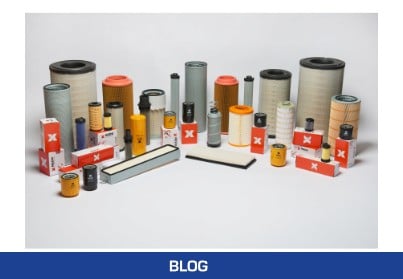
This is the absolute foundation. A Common Rail system is only as precise as the fuel that reaches it. Never skimp on fuel filters. Use only high-quality, proven products, such as REDX brand filters, which guarantee the fine filtration required. Replace them regularly according to the machine manufacturer's recommendations.
- Use clean, high-quality fuel from trusted sources. Avoid fuel from questionable containers.
- Be clean during refueling. Ensure no dirt, sand, or water enters the tank.
- Regularly drain water from the water separator/pre-filter. Water is the biggest enemy of the injection system.
Suspect an injector problem in your machine? Don't delay!
Whether it's a Perkins engine in your Manitou, a Cummins in your Case excavator, or an Isuzu in your JCB JS220, we'll help you diagnose the problem. We offer access to top-quality REDX fuel filters, as well as brand new or professionally remanufactured injectors. Contact us to protect the heart of your machine!
Related posts
 Caterpillar (CAT) — history, series & models (ultra), spare parts: mini excavators, excavators, backhoe loaders
CAT — the global #1. Deep brand history, extended series/model lists and our spare parts offer (mini excavators,...
Read more
 Doosan — excavators, loaders, ADTs: history, models, spare parts
Doosan — brand history, DX/DL/DA families, extended model list and spare parts offer. VIN-based matching. Call: +48...
Read more
 Ecomat — compact skid steers & articulated loaders: history, models, spare parts
Ecomat — Italian compact loaders. Brand story, ES/ET/EL series, popular models and our spare parts offer. VIN/model...
Read more
 Eurocomach — mini/midi excavators & compact track loaders: history, models, spare parts
Eurocomach — Italian mini/midi excavators and compact track loaders. Explore brand history, popular ZT/TR/UR models...
Read more
 AGCO Power (Sisu): Finnish Power and Legendary Reliability
Explore the history and power of Finnish AGCO Power engines, formerly Sisu. From legendary, indestructible units to...
Read more
WE OFFER PRODUCTS OF THE BEST BRANDS



















SERWIS KOP Sp. z o.o. Sp.k.
ul. Podkarpacka 57A, 35-082 Rzeszów
NIP: 813-352-97-49 REGON: 180286726
Opening hours
Telephone support - Monday - Friday (8:00 AM – 5:00 PM)
Order pick-up - Monday - Friday (8:00 AM – 4:30 PM)
Email
[email protected]
[email protected]
Gadu-Gadu communicator
GG: 4185846 - Daniel
ul. Podkarpacka 57A, 35-082 Rzeszów
NIP: 813-352-97-49 REGON: 180286726
Opening hours
Telephone support - Monday - Friday (8:00 AM – 5:00 PM)
Order pick-up - Monday - Friday (8:00 AM – 4:30 PM)
[email protected]
[email protected]
Gadu-Gadu communicator
GG: 4185846 - Daniel
Phone
+48 17 864 31 00
+48 17 864 00 24
+48 17 864 25 96
Mobile phone
+48 607-700-547
+48 695-944-818
+48 691-330-531
+48 690-906-751
Fax
+48 17 864 31 20
+48 17 864 31 00
+48 17 864 00 24
+48 17 864 25 96
Mobile phone
+48 607-700-547
+48 695-944-818
+48 691-330-531
+48 690-906-751
Fax
+48 17 864 31 20