-


-


-
 ALL CATEGORIES
-
-
-
-
-
-
SLEW SYSTEM
-
-
-
-
-
AXLES
- TIE RODS
- KIT SPIDER FOR DRIVE SHAFTS
- DIFFERENTIAL
- MOUNT THE KNUCKLE
- KIT SPIDER FOR AXLE SHAFTS
- HUB / GEAR REDUCTION
- PROPSHAFTS
- SOLENOID VALVES / COILS
- FLANGES / COUPLING YOKES
- BEARINGS
- BUSHES / WASHERS MOUNT AXLE
- AXLE / DIFFERENTIAL HOUSING
- DRIVESHAFTS / CENTER JOINTS
- BOLTS / NUTS / STRAPS
- LOCK / CIRCLIP / CLIP
- CROWN WHEEL AND PINIONS
- SEALS
- OTHERS
-
-
-
-
-
-
-
-
ENGINE
-
-
-
-
-
COILS / SOLENOID VALVES
-
SWIVELS / TURNING JOINTS
-
PUMPS / STEERING VALVES / MOTORS
-
-
-
VALVES
-
HYDRAULIC HOSES / PIPES
-
RAMS
-
ACCUMULATORS
-
QUICKHITCHES
-
-
-
BOLTS / NUTS / WASHERS
-
PUMP DRIVESHAFTS
-
SEALS VALVES / PUMPS
-
OTHERS
-
-
-
-
-
-
-
TIMING
-
EQUIPMENT
-
-
LUBRICATION SYSTEM
-
-
INDUCTION / EXHAUST SYSTEM
-
SEALS / GASKET SETS
-
ENGINE MOUNTING
-
SERVICE TOOLS
-
-
-
-
-
-
STABILIZERS
-
-
-
-
-
-
FUSES / FUSE BOXES
-
RELAYS / FLASHERS
-
REVERSE ALARM
-
-
HEATERS / BLOWERS
-
BATTERY ISOLATER SWITCH
-
-
-
-
-
OILS
-
FLUIDS
-
-
-
PAINTS
-
-
-
-
-
-
-
GLASS / CAB GLAZING
-
-
-
RUBBER SEALS - GLASS
-
ASSEMBLY KITS / ADHESIVES
-
-
-
-
-
ADAPTERS
-
BOLTS / LOCKS
-
-
-
-
HYDRAULIC INSTALLATIONS
-
TOEPLATES
-
TOOTH RIPPER
-
-
-
HYDRAULIC HAMMERS / TOOLS
-
PLOWS
-
QUICKHITCHES
-
FORKS
-
-
-
EARTH DRILL / AUGER
-
SWEEPER / COMPONENTS
-
SWINGOTILT / PLATFORMS
-
-
-
-
-
ACCESSORIES
-
DECAL / STICKERS
-
-
-
GADGETS
-
CLOTHES
-
FAN ZONE
-
-
-
 BODYWORK
 UNDERCARRIAGE
 TRANSMISSION / AXLES / WHEELS
 STEERING / CONTROL
 HYDRAULICS
 BRAKES
 ENGINE
 ARMS / SWING / STABILIZERS
 ELECTRICS
 OILS / FLUIDS / LUBRICANTS / PAINTS
 FILTERS
 GLASS / CAB GLAZING
 TEETH / ADAPTORS / PIN LOCKS
 ATTACHMENTS
 ACCESSORIES / TOOLS

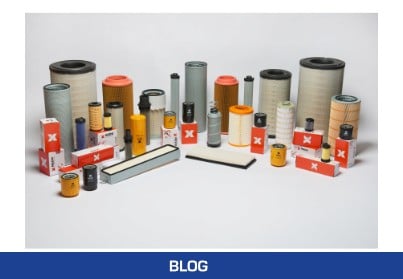

Caterpillar Undercarriage: A Complete Guide to Components, Service, and Technology (SystemOne)
Caterpillar Undercarriage: A Complete Guide to Components, Service, and Technology (SystemOne)
The Foundation That Carries the Most Cost
The tracked undercarriage system is undoubtedly the hardest working and one of the most expensive systems to maintain on any excavator or dozer. It supports the entire weight of the machine (often several dozen tons), transfers the massive drive force, and allows work in conditions where wheeled vehicles would be instantly immobilized. Caterpillar, a leader in this field, estimates that undercarriage service and replacement costs can account for up to 50% of a machine's total maintenance costs over its entire life.
Its technical condition has a direct impact on performance, safety, and fuel consumption. Many operators and owners treat the undercarriage as a "black box"—as long as it works, it's ignored. This is a mistake that leads to premature and very costly failures. In this complete guide, we will conduct an in-depth analysis of each key CAT undercarriage component to help you understand how it works, how to maintain it, and how to diagnose its wear.
The "Big Five": Anatomy of CAT Undercarriage Components
A tracked undercarriage is an interconnected system. The wear of one component drastically accelerates the wear of the others. To understand this process, we need to know the "Big Five"—the five key components that make up this system:
- Track Chains: The heart and backbone of the undercarriage.
- Sprockets (Drive Wheels): Transfer power from the final drive to the chains.
- Idlers (Tension Wheels): Guide the chain and are responsible for its tension.
- Track Rollers (Bottom Rollers): Carry the entire weight of the machine, rolling on the chain.
- Carrier Rollers (Top Rollers): Support the upper, returning section of the chain.
In addition, there are the travel motors (final drives) and the tensioning system. In this article, we will focus on the "Big Five".
Part 1: The Track Chain – The Foundation of Durability
The track chain is the most complex and fastest-wearing component of the undercarriage. It is in direct contact with the sprocket, the idler, and the track rollers. Its lifespan determines the lifespan of the other components.
Anatomy of a Chain: What's Inside?
A chain is not a solid piece of metal. It's a precision mechanism made up of dozens of moving links, and each link is an assembly of:
- Links: Two forged steel components that form the outer structure. They have a rail (raceway) on which the rollers travel.
- Pin: A steel pin that connects the links, forming a pivot point.
- Bushing: A precision bushing fitted over the pin. It is the outer surface of the bushing that engages with the sprocket teeth.
Key Difference: Dry vs. Lubricated Chains
Older machines or small dozers used "dry" chains, where the pin rotated directly inside the bushing (metal-on-metal). Such chains wore out ("stretched") at an express rate.
Modern Caterpillar (Heavy Duty) undercarriages and high-quality replacements (like KERTRACK) are Sealed and Lubricated Track (SALT) chains. In a SALT chain, the space between the pin and bushing is factory-filled with grease and protected by precision seals. This virtually eliminates internal wear (pin-to-bushing), and all wear is concentrated on the external components (bushing-to-sprocket, link-to-roller). This design drastically extends undercarriage life.
What is "Track Pitch"?
This is the most important dimension of a track chain. Pitch is the distance measured from the center of one pin to the center of the next pin. Why is this so critical? Because it must perfectly match the spacing of the teeth on the sprocket. A new chain and a new sprocket form a perfectly matched set.
Anatomy of Chain Wear: "Stretching"
A chain doesn't "stretch" in the plastic sense. It wears, and the result of this wear is an increase in its pitch. This happens because working in sand and mud causes material to abrade the pin and bushing (in dry chains) and the bushing and link. The more wear, the more play in each joint. These microscopic gaps add up over the entire length of the chain, causing it to "lengthen," which is the increase in pitch. The consequences for the rest of the undercarriage are disastrous.
Track Shoes (Grouser Pads)
The chains alone do not provide traction. Bolted to each link are steel plates, called track shoes. Their selection also matters:
- Single Grouser Shoes: Standard on dozers. They offer maximum traction and ground penetration.
- Triple Grouser Shoes: Standard on excavators (e.g., CAT 320). They offer very good traction while being able to turn easily and causing less ground disturbance.
- Flat Pads / Rubber Pads (Roadliners): Used for working on asphalt or pavement to prevent surface damage.
The Golden Rule of Shoe Selection
Always use the narrowest possible track shoes that provide sufficient floatation for your ground conditions. Working on unnecessarily wide shoes (e.g., 800mm on hard ground) dramatically increases the torsional stress on the entire system, leading to faster wear on pins, bushings, and loosening bolts.
Part 2: The Sprocket (Drive Wheel) – Power Transfer
If the chain is the backbone, the sprocket is the engine that moves it. It is a massive, steel component with teeth, driven directly by the final drive (travel motor). Its sole purpose is to precisely engage with the bushings of the track chain and transfer the immense torque.
Anatomy of Wear: The "Pitch" Relationship
This is where we get to the heart of undercarriage life. As mentioned, a new chain has a perfect pitch that perfectly matches the spacing of the teeth on a new sprocket. The chain bushing fits perfectly in the "valley" between the teeth.
Over time, the chain wears, and its pitch increases. The sprocket also wears, and its teeth become thinner and sharper. The problem is that these two components wear together and adapt to each other. A worn, "stretched" chain will only fit a worn sprocket with "pointy" teeth.
The Critical Service Error: New Chain on an Old Sprocket
This is the fastest way to destroy a new chain worth thousands. If you install a new chain (with a perfect, short pitch) onto an old, worn sprocket (with sharp teeth and an increased pitch), they will not match. The sprocket teeth will not engage the bushings correctly. They will ride up on the bushings, causing them to wear out abnormally fast and can even lead to cracks. The rule is simple: always replace sprockets as a set with new chains.
Symptoms of a Worn Sprocket
- Sharp Teeth ("Shark Fins"): The most visible symptom. The teeth go from thick and blunt to thin, sharp, and often hooked in one direction.
- Track Jumping: A loud, metallic "bang" when tracking under load. This is the sound of worn teeth failing to hold the chain bushing and "jumping" a link.
High-quality sprockets, like those from KERTRACK, are induction-hardened across the entire tooth working surface for maximum durability.
Part 3: The Idler and Tensioner System
This is the entire system located at the front of the undercarriage (opposite the sprocket) which serves two fundamental purposes: it guides the chain and, most importantly, it maintains its correct tension.
a) The Idler Wheel
Design: This is a massive, smooth wheel that the track links roll on. It has a central flange (on excavators) or two side flanges (on dozers) that fit perfectly into the center of the chain. Inside the idler are heavy-duty sleeve bearings and precision duo-cone seals to keep oil in and dirt out.
Role: Its job is to guide the chain. The flanges prevent the track from moving side-to-side. The idler is what the chain is "pushed" against when tracking in reverse, making its condition critical for stability.
b) The Tensioner System
The idler is not rigid. It's mounted in a sliding yoke, which is connected to two components:
1. Grease Cylinder (Track Adjuster): This is the component used to adjust the tension. It's a simple hydraulic cylinder which is filled with grease (not oil) via a zerk (grease fitting). By pumping in grease, the piston rod extends, pushing the idler yoke forward and tensioning the track.
2. The Main Spring (Recoil Spring): This is the undercarriage's most important shock absorber. The yoke rests against this spring. Its job is not to tension, but to absorb shock. When the machine hits a large rock or log that gets caught in the track, this spring allows the entire idler assembly to momentarily retract, protecting the chain and frame from breaking.
Anatomy of Tensioner Failure
- "Falling Track": The classic symptom of a leaking tensioner cylinder. The operator tensions the track, but after a few hours, the grease leaks past the worn seals (e.g., VICORTEX seals), the rod retracts, the track becomes loose, and it falls off on the first turn.
- Worn Idler: When the guiding flanges on the idler wear down, they become thin and sharp. They can no longer keep the chain centered. Combined with a loose chain, this is a guarantee for de-tracking.
- Broken Main Spring: A very dangerous failure. The system loses all its shock absorption. All impacts are transferred directly to the frame and the final drive. The symptom is a "dead" idler that does not recoil when hitting obstacles.
Part 4: Track Rollers (Bottom Rollers) – Carrying the Load
The track rollers are the components that literally carry the entire weight of the machine. A 22-ton CAT 320 excavator rests on just 14 or 16 rollers. This means each one must constantly support loads measured in tons, all while rotating and rolling along the track chain's rail.
Anatomy of a Track Roller
From the outside, a roller looks like a simple, solid piece of cast iron. In reality, it's a precision assembly consisting of:
- Body: An induction-hardened steel casting, whose outer surface (the raceway) is hardened to fight wear.
- Internal Shaft and Sleeve Bearings: Inside the body are precision bronze sleeve bearings that rotate on a steel shaft.
- Duo-Cone Seals: This is the key element. Two perfectly smooth, spring-loaded metal rings that form a perfect face seal. They keep lubricating oil inside the roller and protect the bearings from dirt and water.
Caterpillar rollers are designed as Single Flange and Double Flange. They are mounted alternately to precisely guide the chain and prevent "snaking".
Anatomy of a Roller Failure
- Normal Wear (Abrasion): Over time, the roller's running surface and its flanges wear down and become thinner. This is a normal process.
- Oil Leak (Duo-Cone Seal Failure): The most common cause of premature failure. Hitting a rock or working in aggressive environments can damage the seal. The lubricating oil leaks out, and sand and water get in.
- Seizure and Flat-Spotting: This is the result of an oil leak. The roller stops turning. From this point, the chain no longer rolls over it but grinds it flat. This creates a "square roller." Such a failure drastically accelerates chain wear and generates massive vibrations.
Part 5: Carrier Rollers (Top Rollers)
These are the smaller rollers mounted on top of the track frame. Their sole job is to support the upper, sagging section of the heavy track chain, preventing it from drooping and hitting the frame. Although they carry much less load than the track rollers, their failure is also problematic. A seized top roller will also be ground flat by the chain, damaging the chain links.
Part 6: CAT Undercarriage Technologies – SystemOne™ vs. Heavy Duty
Caterpillar wouldn't be itself if it hadn't developed different types of undercarriages for different applications. The most important distinction is between the standard (Heavy Duty) undercarriage and the revolutionary SystemOne™.
a) Standard (Heavy Duty / General Duty) Undercarriage
Profile: This is the classic, proven undercarriage, based on the traditional Sealed and Lubricated Track (SALT) chain. It consists of all the "Big Five" components described above. The sprocket is a "star" (or segmented), and the chain consists of separate pins, bushings, and links.
Pros: Proven technology, massive availability of replacement parts (both genuine and high-quality aftermarket, like KERTRACK), ability to be reconditioned (e.g., "pin and bushing turn").
Cons: Requires sprocket replacement with every chain change. Sensitive to improper tension.
b) Cat SystemOne™ Undercarriage (The Innovation)
Profile: This is a radically different approach to undercarriage design, introduced by CAT on small to medium-sized machines (e.g., D3-D6 dozers). It was designed from the ground up to extend life and lower ownership costs.
Key Differences:
- Different Chain: The links are a one-piece design (no separate, replaceable bushing). The pin rotates inside a specially shaped, hardened link bore. The entire assembly is sealed for life.
- Different Sprocket: The SystemOne sprocket does not have traditional "teeth." Instead, it has "pockets" that the chain links fit into.
- Different Rollers and Idlers: The roller and idler tread is wider and flatter to perfectly match the new chain shape.
Pros of SystemOne™ (according to Caterpillar):
- Longer Life: The system is designed so that all components (chain, rollers, sprockets) wear out at a balanced rate, extending the life of the entire undercarriage by up to 50%.
- No "Bushing Turn": Since there are no separate bushings, the costly procedure of turning them is eliminated.
- Lower Service Costs: Longer life means less downtime and fewer replacements.
Cons of SystemOne™:
- No Compatibility: SystemOne components absolutely do not fit a standard undercarriage (and vice versa). You cannot put a SystemOne chain on a standard sprocket.
- Higher Initial Cost: It is a more expensive technology to purchase.
- Fewer Aftermarket Options: Due to its patented design, the market for high-quality replacements (like KERTRACK) is much larger for standard (Heavy Duty) undercarriages.
Part 7: Key Service and Operation Principles – How to Save 50% on Costs?
Since the undercarriage is 50% of your maintenance cost, this is where the biggest savings are. Proper operation and daily maintenance can double the life of your components.
Rule #1: Correct Tension is Sacred (The "Goldilocks" Rule)
This is the most important rule. The tension must be "just right."
- Track too loose: Leads to "snaking," de-tracking, and unnatural wear on the sides of rollers, idlers, and chain links.
- Track too tight: This is the "silent killer." It creates massive friction and tension that destroys the bearings in the final drive (e.g., TRK), the roller bearings, and the idler bearings, and can lead to chain cracking. It also drastically increases fuel consumption.
Rule #2: Cleanliness = Life
This refers to "packing." Mud, clay, snow, or rocks that get "packed" between the sprocket and the chain bushings act like a wedge, artificially and extremely tightening the track. This leads to the same failures as an intentionally over-tensioned track. The operator must regularly clean the undercarriage, especially after working in mud and before parking the machine in freezing temperatures (where mud will freeze solid).
Rule #3: Operating Technique Matters
A tracked machine is not a race car. How you move has a huge impact on wear:
- Avoid unnecessary high-speed tracking: High speed generates heat, which destroys the seals in rollers and final drives.
- Avoid excessive reverse operation: The undercarriage is designed to work "forward" (chain pulled by the sprocket). Driving in reverse "pushes" the chain onto the looser idler, causing more wear on the sprocket-bushing interface.
- Make wide turns: Aggressive counter-rotation (pivot turns) generates massive side-loads that grind down roller flanges and bend track shoes.
- Avoid constant operation on side slopes: This shifts the machine's entire weight onto one side, causing rapid, one-sided undercarriage wear.
FAQ - Frequently Asked Questions
1. Why is my track "squeaking"?
Squeaking is most often a sign of a dry, seized pin-and-bushing joint in a dry (non-lubricated) chain. It could also be the sound of a seized track roller or carrier roller.
2. What wears out faster – rollers or the chain?
It depends on the working conditions. In abrasive soil (sand), the chain bushings and sprockets wear fastest. In hard, rocky ground (high impact), the track rollers and idlers may wear out first.
3. What's the difference between SystemOne and a standard undercarriage?
SystemOne™ is a patented CAT technology where the chain link and bushing are one integrated piece, and it uses a "pocketed" sprocket instead of teeth. These systems are not interchangeable. SystemOne is designed for longer, balanced wear life but cannot be serviced (e.g., "pin and bushing turn") like a standard undercarriage.
4. Why must I replace the sprocket with the chain?
Because the chain and sprocket wear as a matched set. A worn chain has an increased "pitch" (it's stretched). Putting a new chain on an old sprocket (or vice versa) will cause a mismatch that will destroy the new component in a few hundred hours.
5. How does bad track tension destroy the final drive (travel motor)?
A track that is too tight acts like a giant clamp. It creates massive radial load on the final drive's output shaft and bearings. This leads to bearing overheating, seal failure, and catastrophic failure of the entire planetary gearset (e.g., a TRK unit).
The undercarriage is a system. Maintain it comprehensively.
Understanding how all undercarriage components work together is the key to lowering your operating costs. In our offer, you will find complete, high-quality undercarriage sets from the KERTRACK brand – from chains and rollers to sprockets and idlers. We also offer reliable, complete travel motors from TRK TRACK SOLUTIONS. Remember, a functional tensioner requires reliable VICORTEX seals, and the entire boom requires solid CORESPEX pins. Contact us, and our experts will help you select the perfect component set for your machine!
The materials and product descriptions contained in this article are for informational purposes only and do not imply that SERWIS KOP SP. Z O.O. SP. K. is an authorized distributor or representative of Caterpillar® (or any other manufacturer mentioned in the text). Names and trademarks are the property of their respective owners. Before purchasing or applying any product, we recommend checking the official manufacturer's recommendations and contacting an authorized service center. We are not responsible for any damages resulting from the use of materials described in this article.
Related posts
 Bandit — chippers, “The Beast” grinders, stump grinders: history, models, spare parts
Bandit — global leader in wood processing equipment. Explore brand history, extended model list and our aftermarket...
Read more
 Caterpillar (CAT) — history, series & models (ultra), spare parts: mini excavators, excavators, backhoe loaders
CAT — the global #1. Deep brand history, extended series/model lists and our spare parts offer (mini excavators,...
Read more
 Doosan — excavators, loaders, ADTs: history, models, spare parts
Doosan — brand history, DX/DL/DA families, extended model list and spare parts offer. VIN-based matching. Call: +48...
Read more
 Ecomat — compact skid steers & articulated loaders: history, models, spare parts
Ecomat — Italian compact loaders. Brand story, ES/ET/EL series, popular models and our spare parts offer. VIN/model...
Read more
 Eurocomach — mini/midi excavators & compact track loaders: history, models, spare parts
Eurocomach — Italian mini/midi excavators and compact track loaders. Explore brand history, popular ZT/TR/UR models...
Read more
WE OFFER PRODUCTS OF THE BEST BRANDS



















SERWIS KOP Sp. z o.o. Sp.k.
ul. Podkarpacka 57A, 35-082 Rzeszów
NIP: 813-352-97-49 REGON: 180286726
Opening hours
Telephone support - Monday - Friday (8:00 AM – 5:00 PM)
Order pick-up - Monday - Friday (8:00 AM – 4:30 PM)
Email
[email protected]
[email protected]
Gadu-Gadu communicator
GG: 4185846 - Daniel
ul. Podkarpacka 57A, 35-082 Rzeszów
NIP: 813-352-97-49 REGON: 180286726
Opening hours
Telephone support - Monday - Friday (8:00 AM – 5:00 PM)
Order pick-up - Monday - Friday (8:00 AM – 4:30 PM)
[email protected]
[email protected]
Gadu-Gadu communicator
GG: 4185846 - Daniel
Phone
+48 17 864 31 00
+48 17 864 00 24
+48 17 864 25 96
Mobile phone
+48 607-700-547
+48 695-944-818
+48 691-330-531
+48 690-906-751
Fax
+48 17 864 31 20
+48 17 864 31 00
+48 17 864 00 24
+48 17 864 25 96
Mobile phone
+48 607-700-547
+48 695-944-818
+48 691-330-531
+48 690-906-751
Fax
+48 17 864 31 20