-


-


-
 ALL CATEGORIES
-
-
-
-
-
-
SLEW SYSTEM
-
-
-
-
-
AXLES
- TIE RODS
- KIT SPIDER FOR DRIVE SHAFTS
- DIFFERENTIAL
- MOUNT THE KNUCKLE
- KIT SPIDER FOR AXLE SHAFTS
- HUB / GEAR REDUCTION
- PROPSHAFTS
- SOLENOID VALVES / COILS
- FLANGES / COUPLING YOKES
- BEARINGS
- BUSHES / WASHERS MOUNT AXLE
- AXLE / DIFFERENTIAL HOUSING
- DRIVESHAFTS / CENTER JOINTS
- BOLTS / NUTS / STRAPS
- LOCK / CIRCLIP / CLIP
- CROWN WHEEL AND PINIONS
- SEALS
- OTHERS
-
-
-
-
-
-
-
-
ENGINE
-
-
-
-
-
COILS / SOLENOID VALVES
-
SWIVELS / TURNING JOINTS
-
PUMPS / STEERING VALVES / MOTORS
-
-
-
VALVES
-
HYDRAULIC HOSES / PIPES
-
RAMS
-
ACCUMULATORS
-
QUICKHITCHES
-
-
-
BOLTS / NUTS / WASHERS
-
PUMP DRIVESHAFTS
-
SEALS VALVES / PUMPS
-
OTHERS
-
-
-
-
-
-
-
TIMING
-
EQUIPMENT
-
-
LUBRICATION SYSTEM
-
-
INDUCTION / EXHAUST SYSTEM
-
SEALS / GASKET SETS
-
ENGINE MOUNTING
-
SERVICE TOOLS
-
-
-
-
-
-
STABILIZERS
-
-
-
-
-
-
FUSES / FUSE BOXES
-
RELAYS / FLASHERS
-
REVERSE ALARM
-
-
HEATERS / BLOWERS
-
BATTERY ISOLATER SWITCH
-
-
-
-
-
OILS
-
FLUIDS
-
-
-
PAINTS
-
-
-
-
-
-
-
GLASS / CAB GLAZING
-
-
-
RUBBER SEALS - GLASS
-
ASSEMBLY KITS / ADHESIVES
-
-
-
-
-
ADAPTERS
-
BOLTS / LOCKS
-
-
-
-
HYDRAULIC INSTALLATIONS
-
TOEPLATES
-
TOOTH RIPPER
-
-
-
HYDRAULIC HAMMERS / TOOLS
-
PLOWS
-
QUICKHITCHES
-
FORKS
-
-
-
EARTH DRILL / AUGER
-
SWEEPER / COMPONENTS
-
SWINGOTILT / PLATFORMS
-
-
-
-
-
ACCESSORIES
-
DECAL / STICKERS
-
-
-
GADGETS
-
CLOTHES
-
FAN ZONE
-
-
-
 BODYWORK
 UNDERCARRIAGE
 TRANSMISSION / AXLES / WHEELS
 STEERING / CONTROL
 HYDRAULICS
 BRAKES
 ENGINE
 ARMS / SWING / STABILIZERS
 ELECTRICS
 OILS / FLUIDS / LUBRICANTS / PAINTS
 FILTERS
 GLASS / CAB GLAZING
 TEETH / ADAPTORS / PIN LOCKS
 ATTACHMENTS
 ACCESSORIES / TOOLS

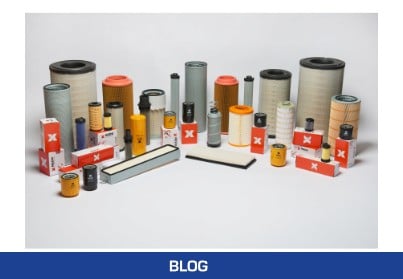


Caterpillar Filtration Anatomy: A Complete Guide to Oil, Fuel, Air, and Hydraulic Filters
Caterpillar Filtration Anatomy: A Complete Guide to Oil, Fuel, Air and Hydraulic Filters
Filtration: The Machine’s Internal Defense System
In the world of construction equipment, Caterpillar is known for one thing: building machines that survive the harshest conditions on Earth. The key to this legendary durability isn’t just heavy metal. It’s an obsessive focus on keeping internal systems clean. Caterpillar doesn’t treat filters as cheap consumables to be swapped in and out. They’re treated as an integral part of the engine, hydraulic and drivetrain design, engineered together with the fluids (Cat DEO, HYDO, TDTO oils) and components (pumps, injectors).
Using a low-cost “will-fit” replacement in a CAT machine is like building a flood barrier out of cardboard. It might fit dimensionally, but it will fail when it matters. In this complete guide we examine why genuine Cat filters are different and how their unique construction protects your investment.
Part 1: Air Filters – The Lungs of the Engine and Turbo
A diesel engine in a CAT 320 excavator ingests thousands of liters of air per minute. That air is drawn straight from a cloud of jobsite dust—a mix of silica (sand), soot, and other hard particles. Allowing even small amounts of this dust into the engine leads to “dusting,” which can destroy the turbocharger and cylinder walls within hours. That’s why Cat’s air filtration system is so advanced.
a) Primary Filter and Its Unique Construction
This element does 99.9% of the work. Construction differences in Cat filters are critical:
- Radial Seal: Many low-cost filters use a flat end gasket clamped by the cover. That setup is prone to leakage—one grain of sand on the gasket can allow dust to bypass. Cat filters use a radial seal: a special polyurethane seal on the inner diameter of the element that “press-fits” onto the intake tube inside the housing. It creates a far more secure, leak-resistant connection that’s less sensitive to vibration and installation errors.
- Filter Medium (Element): Cheap filters have little, low-basis-weight paper. Cat elements provide maximum filtration area thanks to tightly packed pleats, enabling huge dust holding capacity while maintaining low restriction. That extends filter life and reduces fuel consumption.
- Structural Stability: To prevent pleats from “sticking” under moisture and pulsing airflow, Caterpillar applies exterior adhesive beads that keep a constant spacing between pleats. Low-cost filters lack this, so their effective filtration area can drop by half after just a few days in service.
b) Safety (Secondary) Element – Your Insurance Policy
A smaller element located inside the primary filter. Its role is widely misunderstood.
Critical Service Error: What Is the Safety Element For?
The safety element is not intended to filter air during normal operation. It’s the last line of defense in two cases:
1. During service: When you remove a dirty primary element, dust can fall onto the “clean” side of the housing. The safety element catches this debris and saves the turbocharger.
2. If the primary fails: Should a low-quality primary crack or leak, the safety element is the only thing standing between the engine and disaster.
That’s why the safety element is replaced infrequently (e.g., every third primary change) and must never be removed during a standard primary replacement.
c) Pre-Cleaners
On machines operating in extreme dust (e.g., CAT D6 dozers in mining), the standard cyclonic housing is not enough. Additional pre-cleaners (“hats” or “mushrooms”) are mounted on the intake stack. They centrifuge up to 90% of heavy dust out before it reaches the primary housing, multiplying service life.
Part 2: Fuel Filters – Protecting Injectors and the CR Pump
If airborne dust is the engine’s “silent killer,” contaminants and water in fuel are the Common Rail system’s “serial killer.” In modern CAT C7.1 or C9.3B engines, injectors operate above 2000 bar. Components are fitted to 2–3 microns. A microscopic speck of rust or a droplet of water reaching the injector will instantly damage it—seizing the needle or eroding the tip. The cost? Replacing a full set of injectors and the pump often runs into tens of thousands of PLN.
That’s why Caterpillar—more than most—relies on a multi-stage fuel filtration strategy. One filter is not enough.
System Anatomy: Separator → Primary → Final Filter
The CAT fuel filtration system builds a barrier against two enemies: water and solids.
- 1. Water Separator: First line of defense. It removes water from fuel, which causes corrosion and eliminates lubrication. Draining the clear bowl daily is the most important service action.
- 2. Primary Filter: Typically around 10 microns. Protects the low-pressure lift pump from larger particles.
- 3. Secondary/Final Filter: The heart of protection. An ultra-high-efficiency element.
What Does “Cat UHE” (Ultra High Efficiency) Mean?
This is the final filter designed specifically for Common Rail systems. Its media can trap over 98% of particles as small as 4 microns—a performance level beyond standard filters.
CAT Fuel Filter Anatomy – Why It’s Different
The CAT marketing and technical materials (you provided) emphasize unique construction features designed to prevent the failure they fear most: leakage of unfiltered fuel into the system.
- Spiral Roving: Cheap filters use metal separators between pleats or simply compress the pleats together. Under pulsating fuel pressure, pleats “stick,” drastically reducing filtration area. CAT filters are wrapped in a fiberglass spiral roving that maintains precise spacing between each pleat, ensuring 100% of the media is used throughout service life.
- Nylon Center Tube: Many low-cost filters use a metal center tube. Risk? Manufacturing debris (metal fines) can detach and go straight to the injectors. CAT filters use a molded, non-metal nylon tube that is 30% stronger and eliminates the risk of metallic contamination.
- Molded End Caps: Instead of bonding media to metal end caps (which can leak at the adhesive), CAT often uses one-piece molded polyurethane end caps that permanently seal the media to the housing, eliminating dirty-fuel bypass.
How to Read CAT Filtration Levels
Caterpillar simplifies selection by using four levels:
- Standard (25 microns): For older engines; pre-filtering.
- Advanced (10 microns): Solid protection, often as a primary element in CR systems.
- Ultra High Efficiency (UHE – 4 microns): The absolute standard for all Common Rail systems; essential to protect injectors.
- Fuel/Water Separator: Elements focused on water separation, often rated 10 or 30 microns.
Using high-quality replacement filters, designed to the same rigorous standards (e.g., synthetic media, stable pleat construction)—is critical to protecting the machine. Fitting bargain filters of unknown specification in a CR system is like playing Russian roulette with your injectors.
Part 3: Engine Oil Filters – Protecting the Heart of the Machine
Engine oil has the toughest job of any fluid in the machine. It must lubricate moving parts (bearings, pistons, turbocharger), cool the piston crown, and actively fight contaminants—especially soot. In modern CAT engines with EGR, large amounts of soot enter the oil. The oil filter’s task is to capture these particles before they agglomerate into sludge and block oil passages or destroy precision turbo bearings.
Caterpillar designs its oil filters with a single aim: to withstand the full extended service interval (e.g., 500 hours) without losing filtration performance. A cheap replacement can plug at 150–200 hours.
CAT Oil Filter Anatomy – Why It’s Different
Caterpillar’s oil filter design is unique and patented to solve critical problems that plague low-cost replacements.
1. Problem: Pleat Bunching
In a cheap filter, paper pleats are simply crammed into the canister. Under pulsating oil pressure, pleats bunch together. The result: effective filtration area drops by up to 80%. The filter plugs quickly and the bypass valve opens, sending dirty oil to the engine.
CAT Solution: Spiral Roving. Caterpillar wraps the media with a continuous fiberglass tape that keeps precise spacing between pleats. This guarantees 100% media utilization throughout service life, providing much higher dirt-holding capacity and lower restriction.
2. Problem: Metal Center Tube
Most aftermarket filters use a perforated metal core, creating two issues: it can corrode and, worse, microscopic metal fines from manufacturing may detach. Those “clean” contaminants, once the bypass opens, go straight to the bearings.
CAT Solution: Non-Metallic (Nylon) Center Tube. Cat filters use a molded, glass-fiber-reinforced nylon tube. It’s 30% stronger than metal, won’t corrode, and eliminates the risk of metallic debris entering the clean side.
3. Problem: Leaky End Caps
In low-quality filters, the media is glued to metal end caps. Over time, the adhesive can crack, allowing dirty oil to bypass the media internally.
CAT Solution: Molded End Caps. Instead of adhesive bonds, Caterpillar uses one-piece molded polyurethane end caps that permanently and tightly bond the media to the center tube and can, eliminating bypass risk.
What This Means in Practice
This advanced design means a Cat oil filter can maintain performance and avoid plugging across the full extended oil change interval (e.g., 500 hours) required by modern Cat DEO-ULS oils. A cheap “paper” filter often gives up and opens the bypass after 150–200 hours, forcing the engine to run on dirty oil for the rest of the interval.
That’s why investing in high-quality replacement filters, built to the same rigorous standards (e.g., synthetic media, stable pleat architecture, non-metal cores)—is essential to protect your machine. It’s not a cost; it’s insurance for your turbocharger and bearings.
Part 4: Hydraulic and Transmission Filters – Protecting the Power Systems
The hydraulic system is the machine’s “muscle,” and the transmission is its “tendons.” A failure in either is as costly as an engine failure. Fluids in these systems (Cat HYDO, TDTO) work under extreme pressure and are highly sensitive to contaminants that damage precision fits in piston pumps, valves, and clutch packs.
a) Hydraulic Filters (Cat Hydraulic Filters)
Role: Protect the system from internally generated particles (component wear in pumps and cylinders) and from external ingress (e.g., through cylinder seals — VICORTEX).
CAT Design: Caterpillar uses advanced synthetic media with far higher efficiency and dirt capacity than standard “paper” filters. They capture particles so small they are invisible yet hard enough to score a spool valve. The unique construction (spiral roving, nylon tubes) prevents pleat collapse and “sticking” under high pressure and pulsation—common failures in bargain substitutes.
b) Transmission Filters (Cat Transmission Filters)
Role: Powershift transmission oil (Cat TDTO) has an even tougher job—lubricating gears while cooling clutch packs. It carries unique contaminants—not only metal fines but also friction material dust.
CAT Design: The media used in Cat transmission filters is engineered specifically to capture these fine, “soft” friction particles without plugging. Using a hydraulic or engine filter with different characteristics here can lead to rapid blockage or harmful bypass.
Part 5: Cab Filters – Protecting the Most Valuable Asset
In the discussion about protecting machines, the most important part of the system is often forgotten—the operator. Working in clouds of dust (silica), exhaust gases, and chemical vapors is not only uncomfortable but extremely hazardous. A cab filter isn’t a luxury—it’s basic occupational safety.
- Standard (Dust) Filter: Captures dust, pollen, and larger particles. Replace regularly; a clogged element severely reduces blower performance, leading to poor heating and A/C.
- Activated Carbon Filter: In addition to dust filtration, it includes a carbon layer that absorbs harmful vapors, exhaust and odors (e.g., when working at landfills or paving). It’s essential for protecting the operator’s respiratory system.
FAQ – Extended Questions and Answers
1. Can I blow out an air filter with compressed air?
ABSOLUTELY NOT. It’s the worst service mistake. A blast of compressed air (8 bar) opens up the micro-pores in the paper media, rendering the filter useless. Instead of stopping 5 microns, it starts passing 50. Plus, dust embedded deep in the media won’t be removed anyway. Air filters aren’t cleaned—they’re replaced.
2. I bought a cheap fuel filter and the machine lost power. Why?
Low-quality filters often have far less media and poorer-quality paper, causing much higher flow restriction from new. The lift pump “starves,” can’t deliver the required fuel, and the operator feels power loss under load.
3. What’s the difference between a Cat UHE filter and an “Advanced” filter?
Both are high-quality, but UHE (Ultra High Efficiency) is the top tier. An “Advanced” element might be rated at 10 microns, while UHE guarantees 4-micron performance. For Common Rail systems, always use UHE.
4. Can I fit one cheap filter somewhere in the system?
A chain is only as strong as its weakest link. You might have three genuine CAT filters and one bargain hydraulic filter. When that cheap filter plugs and opens its bypass, all the dirty oil will destroy your hydraulic pump—no matter how good your engine filter is.
5. Why are Cat filters more expensive than replacements?
You’re paying for engineering and assurance. Advanced synthetic media, spiral roving, nylon center tubes and molded end caps are patented solutions that cost more—but they ensure the filter survives a 500- or 1000-hour interval, whereas a bargain filter can fail after 150 hours.
Protecting Your Machine Begins and Ends with Filtration.
Filtration is a connected system. Saving a few dozen PLN on one filter can lead to failures worth tens of thousands. That’s why it’s crucial to use only proven filters that meet rigorous OEM standards. In our range you’ll find a full lineup of high-performance fuel, oil, air and hydraulic filters from REDX, engineered to the same uncompromising standards as genuine Caterpillar filters. Contact us and our experts will help you select a complete filter kit that truly protects your investment!
The materials and product descriptions in this article are for informational purposes only and do not imply that SERWIS KOP SP. Z O.O. SP. K. is an authorized distributor or representative of Caterpillar® (or any other manufacturer mentioned). All names and trademarks are the property of their respective owners. Before purchasing or using any product, we recommend checking the manufacturer’s official guidance and consulting an authorized service center. We are not liable for any damage resulting from the use of the materials described in this article.
Related posts
 Bandit — chippers, “The Beast” grinders, stump grinders: history, models, spare parts
Bandit — global leader in wood processing equipment. Explore brand history, extended model list and our aftermarket...
Read more
 Caterpillar (CAT) — history, series & models (ultra), spare parts: mini excavators, excavators, backhoe loaders
CAT — the global #1. Deep brand history, extended series/model lists and our spare parts offer (mini excavators,...
Read more
 Doosan — excavators, loaders, ADTs: history, models, spare parts
Doosan — brand history, DX/DL/DA families, extended model list and spare parts offer. VIN-based matching. Call: +48...
Read more
 Ecomat — compact skid steers & articulated loaders: history, models, spare parts
Ecomat — Italian compact loaders. Brand story, ES/ET/EL series, popular models and our spare parts offer. VIN/model...
Read more
 Eurocomach — mini/midi excavators & compact track loaders: history, models, spare parts
Eurocomach — Italian mini/midi excavators and compact track loaders. Explore brand history, popular ZT/TR/UR models...
Read more
WE OFFER PRODUCTS OF THE BEST BRANDS



















SERWIS KOP Sp. z o.o. Sp.k.
ul. Podkarpacka 57A, 35-082 Rzeszów
NIP: 813-352-97-49 REGON: 180286726
Opening hours
Telephone support - Monday - Friday (8:00 AM – 5:00 PM)
Order pick-up - Monday - Friday (8:00 AM – 4:30 PM)
Email
[email protected]
[email protected]
Gadu-Gadu communicator
GG: 4185846 - Daniel
ul. Podkarpacka 57A, 35-082 Rzeszów
NIP: 813-352-97-49 REGON: 180286726
Opening hours
Telephone support - Monday - Friday (8:00 AM – 5:00 PM)
Order pick-up - Monday - Friday (8:00 AM – 4:30 PM)
[email protected]
[email protected]
Gadu-Gadu communicator
GG: 4185846 - Daniel
Phone
+48 17 864 31 00
+48 17 864 00 24
+48 17 864 25 96
Mobile phone
+48 607-700-547
+48 695-944-818
+48 691-330-531
+48 690-906-751
Fax
+48 17 864 31 20
+48 17 864 31 00
+48 17 864 00 24
+48 17 864 25 96
Mobile phone
+48 607-700-547
+48 695-944-818
+48 691-330-531
+48 690-906-751
Fax
+48 17 864 31 20