-


-


-
 ALL CATEGORIES
-
-
-
-
-
-
SLEW SYSTEM
-
-
-
-
-
AXLES
- TIE RODS
- KIT SPIDER FOR DRIVE SHAFTS
- DIFFERENTIAL
- MOUNT THE KNUCKLE
- KIT SPIDER FOR AXLE SHAFTS
- HUB / GEAR REDUCTION
- PROPSHAFTS
- SOLENOID VALVES / COILS
- FLANGES / COUPLING YOKES
- BEARINGS
- BUSHES / WASHERS MOUNT AXLE
- AXLE / DIFFERENTIAL HOUSING
- DRIVESHAFTS / CENTER JOINTS
- BOLTS / NUTS / STRAPS
- LOCK / CIRCLIP / CLIP
- CROWN WHEEL AND PINIONS
- SEALS
- OTHERS
-
-
-
-
-
-
-
-
ENGINE
-
-
-
-
-
COILS / SOLENOID VALVES
-
SWIVELS / TURNING JOINTS
-
PUMPS / STEERING VALVES / MOTORS
-
-
-
VALVES
-
HYDRAULIC HOSES / PIPES
-
RAMS
-
ACCUMULATORS
-
QUICKHITCHES
-
-
-
BOLTS / NUTS / WASHERS
-
PUMP DRIVESHAFTS
-
SEALS VALVES / PUMPS
-
OTHERS
-
-
-
-
-
-
-
TIMING
-
EQUIPMENT
-
-
LUBRICATION SYSTEM
-
-
INDUCTION / EXHAUST SYSTEM
-
SEALS / GASKET SETS
-
ENGINE MOUNTING
-
SERVICE TOOLS
-
-
-
-
-
-
STABILIZERS
-
-
-
-
-
-
FUSES / FUSE BOXES
-
RELAYS / FLASHERS
-
REVERSE ALARM
-
-
HEATERS / BLOWERS
-
BATTERY ISOLATER SWITCH
-
-
-
-
-
OILS
-
FLUIDS
-
-
-
PAINTS
-
-
-
-
-
-
-
GLASS / CAB GLAZING
-
-
-
RUBBER SEALS - GLASS
-
ASSEMBLY KITS / ADHESIVES
-
-
-
-
-
ADAPTERS
-
BOLTS / LOCKS
-
-
-
-
HYDRAULIC INSTALLATIONS
-
TOEPLATES
-
TOOTH RIPPER
-
-
-
HYDRAULIC HAMMERS / TOOLS
-
PLOWS
-
QUICKHITCHES
-
FORKS
-
-
-
EARTH DRILL / AUGER
-
SWEEPER / COMPONENTS
-
SWINGOTILT / PLATFORMS
-
-
-
-
-
ACCESSORIES
-
DECAL / STICKERS
-
-
-
GADGETS
-
CLOTHES
-
FAN ZONE
-
-
-
 BODYWORK
 UNDERCARRIAGE
 TRANSMISSION / AXLES / WHEELS
 STEERING / CONTROL
 HYDRAULICS
 BRAKES
 ENGINE
 ARMS / SWING / STABILIZERS
 ELECTRICS
 OILS / FLUIDS / LUBRICANTS / PAINTS
 FILTERS
 GLASS / CAB GLAZING
 TEETH / ADAPTORS / PIN LOCKS
 ATTACHMENTS
 ACCESSORIES / TOOLS

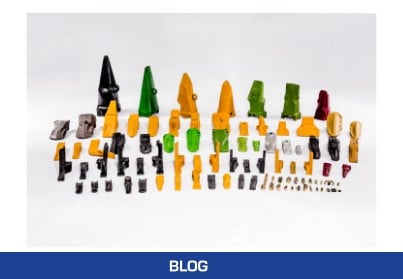

Caterpillar Coolants: A Complete Guide to ELC, DEAC, and the EC-1 Standard
Caterpillar Coolants: A Complete Guide to ELC, DEAC, and the EC-1 Standard
The Fluid That Protects Your Engine From Self-Destruction
For many operators and machine owners, the fluid in the radiator has one job: not to freeze in winter. This is a tragic misconception that leads to failed water pumps, clogged radiators, and worst of all, cavitation and cracked cylinder liners. Modern coolant is one of the most technologically advanced fluids in the entire machine. It operates in extreme conditions—from freezing to boiling—in contact with dozens of different materials: steel, cast iron, aluminum, copper, brass, plastics, and rubber. Its role is not just cooling. It is a liquid protection package that actively fights the engine's three greatest enemies: overheating, corrosion, and cavitation. In this complete guide, we will analyze why water is poison for an engine and how modern OAT fluids differ from old IAT fluids.
Public Enemy #1: Why You Must Never Use Water
Topping up the cooling system with "tap" water (even in summer) is the fastest way to destroy a system worth thousands. Here’s why:
- Limescale: Tap water contains minerals (calcium, magnesium). Under high engine temperatures, these minerals precipitate out, forming a hard deposit (limescale). This scale acts as an insulator—it coats the thin passages in the radiator and heater core, blocking heat transfer. The engine begins to overheat, and the cab heater stops working.
- Corrosion: Water combined with oxygen is the perfect environment for rust. Water "eats" the cast-iron engine block, the aluminum cylinder head, and the copper radiator, and the rust particles circulate, destroying the water pump impeller.
- Low Boiling Point: Water boils at 100°C (212°F). A modern diesel engine in a JCB or CAT machine operates under pressure, and its normal working temperature is 90-105°C. Water is therefore on the verge of boiling, leading to steam pockets.
- Lack of Lubrication: Coolant lubricates a key component—the water pump's mechanical seal. Water has zero lubricating properties, which leads to rapid seal failure and leaks from the pump.
Anatomy of a Coolant: Base + Additive Package
Modern coolant (e.g., a concentrate mixed 50/50 with demineralized water) consists of two elements:
- Base (Ethylene Glycol): Provides the two basic properties—lowering the freezing point (to approx. -37°C / -34°F) and raising the boiling point (to approx. 108-110°C / 226-230°F).
- Additive Package (Inhibitors): This is the heart and most important part of the fluid. It's a chemical package that actively protects the system. And it is the technology of this package that divides fluids into two different, incompatible groups.
Technology 1: IAT (Inorganic Additive Technology) – The "Old School"
How it works: This is the traditional technology, known from green or blue coolants. Its additive package is based on silicates and phosphates. They work "mechanically"—by forming a thick protective layer over all metal components, insulating them from the fluid.
Disadvantages:
- Short Life: Silicates and phosphates deplete quickly ("drop out" of the solution). This fluid loses its anti-corrosion properties after just 2 years or approx. 3,000 hours.
- Poor Heat Transfer: The thick protective layer they create also acts as a thermal insulator, slightly impairing heat exchange.
- Deposits: Depleted silicates can form a gel-like sludge that clogs the radiator and heater core.
Technology 2: OAT (Organic Acid Technology) – The Modern "Long Life" Standard
How it works: This is the modern technology, known from orange, red, or pink fluids. It contains no silicates or phosphates. Its additive package is based on organic acids. It works "intelligently"—it doesn't create a thick layer over the entire system. It circulates in liquid form and activates only in areas where it detects the start of corrosion, forming a very thin, extremely durable protective layer there.
Advantages:
- Long Life: OAT additives do not deplete quickly. The fluid maintains full anti-corrosion properties for 5 years or more.
- Better Cooling: The absence of a thick insulating layer means better heat transfer.
- Aluminum Protection: OAT fluids are specifically designed to protect modern aluminum radiators and engine heads.
- Excellent Cavitation Protection.
The Cat EC-1 Standard: A Guarantee of Quality
To ensure a coolant meets their rigorous demands, Caterpillar created its own standard: Cat EC-1. This specification defines the requirements for an Extended Life (OAT) coolant. Any fluid (whether genuine Cat ELC or a high-quality aftermarket fluid) must meet this standard to be safely used in Cat engines.
Part 2: Analysis of Cat Coolant Product Lines
The Caterpillar lineup clearly separates fluids into two technologies: modern OAT (the ELC line) and traditional IAT (the DEAC line). The choice between them is a decision on service interval and protection level.
a) Cat ELC™ (Extended Life Coolant) – The Gold OAT Standard
Technology: OAT (Organic Acid Technology).
Profile: This is Caterpillar's flagship coolant, based on OAT. It is a "Long Life" fluid that meets and exceeds the Cat EC-1 standard. It is easily recognizable by its bright red/orange/pink color.
Key Properties:
- Extreme Long Life: This is its biggest advantage. The standard drain interval for Cat ELC is 12,000 hours or 6 years, provided a one-time "Extender" is added halfway through (at 6,000 hours). This is 4 times longer than traditional coolants.
- Superior Protection: OAT technology provides excellent protection against pitting and cylinder liner cavitation, especially in high-output engines like the CAT C7, C9, C13, or C15.
- No Deposits: It does not contain silicates, phosphates, or amines, which eliminates the risk of gel-like deposits clogging the radiator and heater core.
Application: This is the factory-fill for most modern Cat machines (Tier 3 and newer). It is also the best choice when refilling or upgrading older machines (after a thorough system flush).
b) Cat DEAC™ (Diesel Engine Antifreeze/Coolant) – Traditional IAT Protection
Technology: IAT (Traditional), based on ethylene glycol and inorganic inhibitors (silicates and nitrites). Recognizable by its purple color.
Key Properties:
- Shorter Life: Requires changing every 3,000 hours or 2-3 years.
- Requires SCAs: To maintain full corrosion and cavitation protection, a system filled with DEAC requires regular "conditioning" with an SCA (Supplemental Coolant Additive) or the use of special water filters containing an SCA pellet.
Application: Mainly older generations of Cat engines (pre-Tier 3) that were factory-filled with this type of fluid.
c) Cat Extender – The "Elixir of Youth" for ELC
What is it? This is a small bottle of additive (Part No. 365-1822) that is the key to achieving the full 12,000-hour life from ELC. It is not the same as an SCA!
How it works: After about 6,000 hours (or 3 years), even in the best OAT fluid, some of the specific protection inhibitors (like molybdates) are naturally depleted. The Cat Extender is a precisely formulated "top-up" dose of these exact inhibitors. Adding it to the system restores the ELC to its full anti-corrosion specification for another 6,000 hours.
Application: Only for systems filled with Cat ELC (or another compatible OAT), at the halfway point of its service life.
Critical Service Warning: Mixing Fluids
1. Never mix ELC (OAT) with DEAC (IAT). As mentioned, this leads to a chemical reaction, gel formation, and a clogged system.
2. Never add SCAs to an ELC fluid. OAT coolants do not need SCAs (silicates/nitrites). Adding them "out of habit" will contaminate the fluid and shorten its life.
3. Never add Extender to DEAC fluid. The Extender does not contain the additives that old DEAC fluid needs – it will provide zero protection.
Part 3: Proper Coolant Change Procedure Step-by-Step
A coolant change is not just "drain and fill." To ensure full protection, a system flush is critical. This is the only way to get rid of scale, rust, and (most importantly) residual old fluid of a different technology.
The Proper Change Procedure (Switching from DEAC to ELC):
- Step 1: Safety and Draining. Ensure the engine is cold. Never open a radiator cap on a hot engine! Open the radiator cap (or expansion tank cap) and the drain plugs at the bottom of the radiator and on the engine block. Drain all old fluid (DEAC) into a container.
- Step 2: Initial Flush (Water). Close the drain plugs. Fill the entire system with clean, demineralized water. Start the engine, turn the heater to maximum, and let the engine reach operating temperature (thermostat opens). Let it run for 10-15 minutes.
- Step 3: Drain Again. Stop the engine, let it cool, and drain all the flushing water. If the water is very dirty (purple, rusty), repeat the flushing process.
- Step 4: Refill with New Coolant (ELC). Close all drain plugs. Prepare the new fluid. If using concentrate (e.g., Cat ELC Concentrate), mix it 50/50 with demineralized water for protection down to -37°C. Slowly pour the pre-mixed fluid (e.g., Cat ELC Premixed) into the radiator or expansion tank.
- Step 5: Bleed the Air. Start the engine with the cap off and the heater on. Let it run until it reaches operating temperature and the fluid level stops dropping (top it up as you go). The system will self-bleed. Secure the cap.
Part 4: The Other "Coolant": Cat DEAC (Diesel Exhaust Fluid / AdBlue)
This is not a coolant, but it's often confused with one. In modern Stage V machines, alongside the cooling system, is a second critical fluid system – Selective Catalytic Reduction (SCR), which uses AdBlue (confusingly named DEAC by Cat).
- Role: AdBlue (Diesel Exhaust Fluid) is a 32.5% urea solution. It is injected into the SCR catalyst in the exhaust, where heat turns it into ammonia. This ammonia reacts with harmful Nitrogen Oxides (NOx), converting them into harmless nitrogen and water vapor.
- Quality is Key: The SCR system is extremely sensitive to contamination. Using low-quality or contaminated AdBlue will cause the urea to crystallize, irreversibly clogging the pump, injector, and the SCR catalyst itself. Always use fluid that meets the ISO 22241 standard.
FAQ - Frequently Asked Questions
1. What is the difference between OAT (like Cat ELC) and HOAT coolant?
HOAT (Hybrid Organic Acid Technology) is a hybrid that combines OAT (organic acids) with silicates (from IAT). It's a compromise designed to provide the fast-acting protection of silicates with the longevity of OAT. However, pure OAT (like Cat ELC) is considered the more modern and durable technology.
2. Does coolant color matter? Can I mix a red OAT with an orange OAT?
Color is just a dye and does NOT define the technology! There are green OAT fluids and red IAT fluids. The technology on the label (OAT, IAT, HOAT) is what matters. That said, you should not mix OAT coolants from different brands, as they may use incompatible organic acid packages.
3. What water should I use to dilute a concentrate?
Only demineralized (distilled) water. Using tap water will introduce minerals (limescale) and chlorides into the system, which will shorten the coolant's life and neutralize the OAT protective package, leading to corrosion.
4. Can I use a "Long Life" (OAT) coolant in an old machine?
Yes, provided you thoroughly flush the old IAT fluid out first. Pouring OAT fluid into a dirty, rusty system can dislodge old deposits and clog the radiator. After filling an old system with OAT, it's wise to shorten the first coolant filter change interval (if equipped).
5. What is Cat Extender (365-1822) and when do I use it?
It's a "booster shot" of specific inhibitors (like molybdate) that deplete over time. It is added only to systems already filled with Cat ELC, typically at 6,000 hours, to extend the fluid's life to 12,000 hours. It is NOT a universal additive and must NOT be used with DEAC or other coolant types.
Engine protection starts with the right fluid.
Neglecting the cooling system is a direct path to overheating, cracked heads, and liner cavitation. Using a high-quality, OAT-based coolant like HYPTRON EXTREME PERFORMANCE ENGINE COOLANT (available as pre-mixed or concentrate) is the best investment in a long engine life. Remember, a clean system also relies on effective filters – check our range of REDX filters. Contact us, and we will help you select the right fluids and filters for your machine!
The materials and product descriptions contained in this article are for informational purposes only and do not imply that SERWIS KOP SP. Z O.O. SP. K. is an authorized distributor or representative of Caterpillar® (or any other manufacturer mentioned in the text). Names and trademarks are the property of their respective owners. Before purchasing or applying any product, we recommend checking the official manufacturer's recommendations and contacting an authorized service center. We are not responsible for any damages resulting from the use of materials described in this article.
Related posts
 Bandit — chippers, “The Beast” grinders, stump grinders: history, models, spare parts
Bandit — global leader in wood processing equipment. Explore brand history, extended model list and our aftermarket...
Read more
 Caterpillar (CAT) — history, series & models (ultra), spare parts: mini excavators, excavators, backhoe loaders
CAT — the global #1. Deep brand history, extended series/model lists and our spare parts offer (mini excavators,...
Read more
 Doosan — excavators, loaders, ADTs: history, models, spare parts
Doosan — brand history, DX/DL/DA families, extended model list and spare parts offer. VIN-based matching. Call: +48...
Read more
 Ecomat — compact skid steers & articulated loaders: history, models, spare parts
Ecomat — Italian compact loaders. Brand story, ES/ET/EL series, popular models and our spare parts offer. VIN/model...
Read more
 Eurocomach — mini/midi excavators & compact track loaders: history, models, spare parts
Eurocomach — Italian mini/midi excavators and compact track loaders. Explore brand history, popular ZT/TR/UR models...
Read more
WE OFFER PRODUCTS OF THE BEST BRANDS


















SERWIS KOP Sp. z o.o. Sp.k.
ul. Podkarpacka 57A, 35-082 Rzeszów
NIP: 813-352-97-49 REGON: 180286726
Opening hours
Telephone support - Monday - Friday (8:00 AM – 5:00 PM)
Order pick-up - Monday - Friday (8:00 AM – 4:30 PM)
Email
[email protected]
[email protected]
Gadu-Gadu communicator
GG: 4185846 - Daniel
ul. Podkarpacka 57A, 35-082 Rzeszów
NIP: 813-352-97-49 REGON: 180286726
Opening hours
Telephone support - Monday - Friday (8:00 AM – 5:00 PM)
Order pick-up - Monday - Friday (8:00 AM – 4:30 PM)
[email protected]
[email protected]
Gadu-Gadu communicator
GG: 4185846 - Daniel
Phone
+48 17 864 31 00
+48 17 864 00 24
+48 17 864 25 96
Mobile phone
+48 607-700-547
+48 695-944-818
+48 691-330-531
+48 690-906-751
Fax
+48 17 864 31 20
+48 17 864 31 00
+48 17 864 00 24
+48 17 864 25 96
Mobile phone
+48 607-700-547
+48 695-944-818
+48 691-330-531
+48 690-906-751
Fax
+48 17 864 31 20