-


-


-
 ALL CATEGORIES
-
-
-
-
-
-
SLEW SYSTEM
-
-
-
-
-
AXLES
- TIE RODS
- KIT SPIDER FOR DRIVE SHAFTS
- DIFFERENTIAL
- MOUNT THE KNUCKLE
- KIT SPIDER FOR AXLE SHAFTS
- HUB / GEAR REDUCTION
- PROPSHAFTS
- SOLENOID VALVES / COILS
- FLANGES / COUPLING YOKES
- BEARINGS
- BUSHES / WASHERS MOUNT AXLE
- AXLE / DIFFERENTIAL HOUSING
- DRIVESHAFTS / CENTER JOINTS
- BOLTS / NUTS / STRAPS
- LOCK / CIRCLIP / CLIP
- CROWN WHEEL AND PINIONS
- SEALS
- OTHERS
-
-
-
-
-
-
-
-
ENGINE
-
-
-
-
-
COILS / SOLENOID VALVES
-
SWIVELS / TURNING JOINTS
-
PUMPS / STEERING VALVES / MOTORS
-
-
-
VALVES
-
HYDRAULIC HOSES / PIPES
-
RAMS
-
ACCUMULATORS
-
QUICKHITCHES
-
-
-
BOLTS / NUTS / WASHERS
-
PUMP DRIVESHAFTS
-
SEALS VALVES / PUMPS
-
OTHERS
-
-
-
-
-
-
-
TIMING
-
EQUIPMENT
-
-
LUBRICATION SYSTEM
-
-
INDUCTION / EXHAUST SYSTEM
-
SEALS / GASKET SETS
-
ENGINE MOUNTING
-
SERVICE TOOLS
-
-
-
-
-
-
STABILIZERS
-
-
-
-
-
-
FUSES / FUSE BOXES
-
RELAYS / FLASHERS
-
REVERSE ALARM
-
-
HEATERS / BLOWERS
-
BATTERY ISOLATER SWITCH
-
-
-
-
-
OILS
-
FLUIDS
-
-
-
PAINTS
-
-
-
-
-
-
-
GLASS / CAB GLAZING
-
-
-
RUBBER SEALS - GLASS
-
ASSEMBLY KITS / ADHESIVES
-
-
-
-
-
ADAPTERS
-
BOLTS / LOCKS
-
-
-
-
HYDRAULIC INSTALLATIONS
-
TOEPLATES
-
TOOTH RIPPER
-
-
-
HYDRAULIC HAMMERS / TOOLS
-
PLOWS
-
QUICKHITCHES
-
FORKS
-
-
-
EARTH DRILL / AUGER
-
SWEEPER / COMPONENTS
-
SWINGOTILT / PLATFORMS
-
-
-
-
-
ACCESSORIES
-
DECAL / STICKERS
-
-
-
GADGETS
-
CLOTHES
-
FAN ZONE
-
-
-
 BODYWORK
 UNDERCARRIAGE
 TRANSMISSION / AXLES / WHEELS
 STEERING / CONTROL
 HYDRAULICS
 BRAKES
 ENGINE
 ARMS / SWING / STABILIZERS
 ELECTRICS
 OILS / FLUIDS / LUBRICANTS / PAINTS
 FILTERS
 GLASS / CAB GLAZING
 TEETH / ADAPTORS / PIN LOCKS
 ATTACHMENTS
 ACCESSORIES / TOOLS
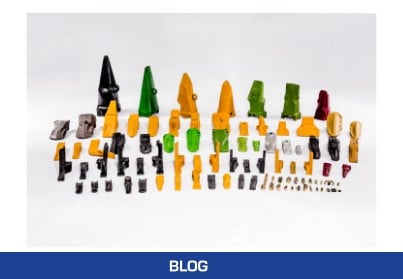

Caterpillar Bucket Teeth: A Complete Guide to J, K, and Advansys Systems
Caterpillar Bucket Teeth: A Complete Guide to J, K, and Advansys Systems
The Tooth – Where Power Meets the Ground
In the entire complex system of a construction machine—from the engine, through the hydraulics, to the steel arm—it is the small tip of the bucket tooth that does the real work. It's the first point of contact with the ground, rock, or rubble. Choosing the right tooth system is one of the most critical decisions, directly impacting digging efficiency, fuel consumption, and the lifespan of the bucket and the entire machine. Working with dull, worn, or, even worse, poorly chosen teeth is like trying to cut a steak with a dull knife—it requires immense force, destroys the tool, and yields terrible results.
Caterpillar, as a leader in earthmoving equipment, has invested decades in the evolution of its G.E.T. (Ground Engaging Tools) systems. In this complete guide, we will analyze the anatomy of CAT's tooth systems—from the legendary J-Series, through the K-Series, to the state-of-the-art Advansys system.
Anatomy of a Tooth System: Three Inseparable Elements
When we say "teeth," we often just think of the replaceable tip. In reality, a professional G.E.T. system consists of three perfectly matched components. Neglecting any one of them leads to the failure of the entire system.
1. The Adapter (Tooth Holder)
What is it? This is the base, the foundation of the entire system. It's a massive, steel component that is welded (or occasionally bolted) directly to the bucket's cutting edge (lip). The adapter is a fixed component, designed for a long service life.
What is its role? It serves two functions: first, it protects the bucket's cutting edge from wear, and second, it creates a precision socket that the tooth fits onto. The shape of the adapter (e.g., CAT J, K, or Advansys) defines which tooth system will fit your bucket.
2. The Tooth (Tip or Point)
What is it? This is the actual working tool—the sacrificial part designed to penetrate the ground and wear away. It is fitted onto the adapter.
What is its role? The machine's entire breakout force is concentrated at its tip. It must be made of steel with extreme hardness and abrasion resistance, yet be resilient enough not to crack on impact. High-quality teeth are precision-cast from alloy steels and heat-treated to achieve the perfect balance between hardness and toughness.
3. The Retainer (Pin and Lock)
What is it? A small but absolutely critical component that locks the tooth to the adapter. Depending on the system, this can be a pin-and-retainer set, an integrated pin, or a modern lock.
What is its role? It keeps the tooth on the adapter. Its failure or wear means instantly losing a tooth in the excavation. You should never save money on retainers. Using old, worn, or non-genuine retainers is asking for trouble. A new tooth should always be installed with a new, dedicated retainer set.
Part 1: The Classic – Caterpillar J-Series System
This is the system that dominated the market for decades and became a global standard, copied by most manufacturers. If you own a CAT machine made in the last 30 years, there's a good chance it uses this system.
How Does the J-Series System Work?
This system is characterized by its horizontal pin retention. The tooth slides onto the adapter, and then a steel pin is driven horizontally (from the side) through the aligned holes in the tooth and adapter. This pin is then locked in place by a round, rubber-and-steel retainer that fits into a recess in the tooth.
J-Series Sizes
The system is scalable and divided into sizes that correspond to the machine's weight class. Key sizes include:
- J200 / J220: Small systems, ideal for mini-excavators and small loaders.
- J250 / J300: The most popular range. The "workhorse" for backhoe loaders (like the CAT 428, 432) and smaller excavators (up to ~15 tons).
- J350 / J400 / J450 (J460): Large, massive systems for production excavators (e.g., CAT 320, 330, 336) and large wheel loaders.
- J550 and up: Systems for the largest mining machines.
Pros and Cons of the J-Series
Pros: Extremely popular (massive parts availability worldwide), very strong and stable connection, wide variety of tooth shapes in every size.
Cons: The retainer. In dirty, corroded, or frozen conditions, knocking out the horizontal pin can be very difficult. It requires force, a hammer, and a punch. Furthermore, the side-mounted retainer is vulnerable to abrasive wear when digging along trench walls.
Part 2: The Evolution – Cat K-Series System
After decades of J-Series dominance, Caterpillar introduced the K-Series as its new, improved platform. The main goal was to eliminate the biggest pain points of its predecessor: the difficult-to-remove horizontal pin and the wear-prone side retainer.
How Does the K-Series System Work?
The K-Series is a revolutionary change in philosophy. Instead of a horizontal pin passing through the adapter, it uses a vertical "twist-on" retainer.
- Installation: The tooth slides onto the adapter, and then a special hardened pin is inserted from the top, passing vertically through the tooth and adapter.
- Locking: The pin is locked not by a ring, but by a special polymer retainer that is inserted into a dedicated slot in the tooth. This retainer is then twisted 90 degrees with a simple wrench, which expands it and locks the entire assembly.
Pros and Cons of the K-Series
Pros: Significantly faster and easier replacement than the J-Series. It doesn't require a heavy hammer and punch—just a simple wrench. The retainer is vertical and protected from side-abrasion. The tooth has a lower profile, improving penetration.
Cons: The system is less "brute-force" proof than the J-Series. The retainer socket can be damaged or become packed with hard material, making removal difficult.
Part 3: The Revolution – Cat Advansys™ Hammerless System
Advansys™ is Caterpillar's answer to all the problems of the J and K systems. It is the latest generation of G.E.T., designed from the ground up for three goals: maximum safety, speed of replacement, and durability. As CAT materials state, it is a "Hammerless" system.
How Does the Advansys System Work?
The heart of the system is the integrated Retainerlock. There are no separate pins, rings, or plugs. The entire locking mechanism is built into the tooth.
- Installation: The operator places the Advansys tooth on the adapter, inserts the integrated lock, and simply twists it 180 degrees with a standard 3/4-inch breaker bar. That's it.
- Removal: Simply twist the lock 180 degrees in the other direction and remove the tooth.
Key Advantages of the Advansys System:
- Safety and Speed: It is a truly hammerless system. The operator no longer needs to strike a hardened pin, risking metal shrapnel and injury. A tooth change takes minutes, not hours, dramatically reducing downtime.
- Longer Adapter Life: Advansys adapters have a new, strengthened profile. Most importantly, the tooth slides over the adapter, covering its top and sides, which protects the adapter itself from abrasion. In the J-Series, the adapter nose was exposed and wore down with the tooth.
- Better Penetration: The system's lower profile and streamlined tooth shape provide 10-15% better penetration than the J-Series, which directly translates to lower fuel consumption.
- Reliable Retention: The lock is fully integrated and protected from impacts, eliminating the risk of losing a tooth.
Part 4: A Catalog of Shapes – Which Tooth for Which Job?
Choosing a mounting system is one part of the equation. The second, equally important decision is selecting the tooth's shape. Using a standard tooth for digging in rock is just as ineffective as using a rock tooth for digging in sand. High-quality manufacturers like Caterpillar and HIMACORE offer a whole range of tooth profiles, each optimized for different conditions.
1. Standard Tooth (General Purpose)
Application: Ideal for most standard earth-moving jobs: digging in soil, clay, sand, and gravel. It's the default choice for backhoe loaders like the JCB 3CX/4CX and CAT 428/432 working in varied conditions.
2. Rock Chisel Tooth (Heavy Duty Rock)
Application: Designed exclusively for extreme-duty work – in quarries, for heavy concrete demolition, and in hard, solid rock. Its powerful design is resistant to fracturing under high-impact loads.
3. Penetration Tooth (Tiger)
Application: Ideal for working in very hard, compacted, but not solid material, such as hard clay, permafrost, or fracturable shale. It acts like a ripper, "tearing" the material. Note: It is less resistant to abrasion and side-impact.
4. Abrasion Tooth
Application: The best choice for wheel loaders (e.g., CAT 950, 966) working in stockpiles (sand, gravel). The tooth is designed to wear evenly while maintaining a sharp profile, extending its life.
Part 5: How to Match a Tooth System to Your Machine and Ground
a) Matching by Machine Size (Weight Class)
- Mini-Excavators (1-6 tons): Use smaller systems, e.g., CAT J200, J220.
- Backhoe Loaders (7-10 tons): The "middle class" (JCB 3CX/4CX, CAT 428/432). Heavy-duty systems like the CAT J250 / J300 are king.
- Excavators (13-30 tons) and Loaders: All about production. Large, massive systems are used (e.g., J350, J400, J450) on excavators like the CAT 320 or Volvo EC220.
b) Matching to Your Existing Adapter
Rule #1: You Don't Just Buy a Tooth, You Buy Into a System!
An operator must know what adapter system is welded to their bucket. If you have CAT J300 adapters, you can only fit CAT J300-standard teeth. This is why identifying your system is critical. High-quality aftermarket brands, like HIMACORE, offer teeth compatible with all popular systems.
Part 6: Wear Diagnostics – When to Replace Teeth vs. Adapters?
This is crucial knowledge that saves a lot of money. Replacing only the teeth when the adapter is already worn is throwing money away.
Scenario 1: Worn Tooth
Symptom: The tooth is short, blunt, and "rounded."
Analysis: This is normal wear. The tooth has stopped "cutting" and is now "pushing." Machine force and fuel consumption increase dramatically.
Solution: Immediate replacement of the tooth.
Scenario 2: Worn Adapter (The Critical Mistake!)
Symptom: You install a new tooth, and it "wobbles" or "clunks" on the adapter. You frequently lose teeth.
Analysis: The adapter's "nose" or socket is worn out and oval-shaped. The tooth no longer fits snugly. The entire digging force is concentrated on the small pin and retainer.
Consequences: Retainer failure, lost teeth, and cracked new teeth.
Solution: Replacing only the teeth is useless. The adapters must be replaced. This requires cutting the old adapters off the bucket lip and welding on new ones.
Scenario 3: Worn Retainer
Symptom: The pin falls out, the tooth is lost, even though there wasn't much play.
Analysis: Retainers (pins and locks) are single-use items! After one install/removal cycle, they lose their tension and can no longer hold the pin in place against vibrations.
Solution: ALWAYS use a new retainer set with every new tooth.
Part 7: Practical Workshop – How to Properly Replace a Tooth?
Replacement Instructions (Side-Pin System, e.g., CAT J)
- Step 1: Clean. Thoroughly clean the retainer pocket of impacted dirt.
- Step 2: Remove the Pin. Place the punch on the pin from the retainer side. With a firm, strong hammer blow, drive the pin out. Warning: The pin is hardened! Always wear safety glasses!
- Step 3: Remove the Tooth. Slide the worn tooth off the adapter.
- Step 4: Inspect and Clean the Adapter. This is the most important step! Inspect the adapter for cracks or wear. Clean its surface with a wire brush.
- Step 5: Install the New Tooth. Slide the new tooth (e.g., a HIMACORE tooth) onto the adapter. It must fit snugly.
- Step 6: Install the Retainer. Place the new retainer into the groove. Insert the new pin from the opposite side and hammer it in until it locks into the retainer.
FAQ - Expanded Questions and Answers
1. Can I weld a tooth directly to the cutting edge?
You can, but it's very bad practice. You lose the ability to quickly change it, and the different steels can lead to cracks. When the weld-on tooth wears out, the entire bucket lip is compromised. Always use an adapter + tooth system.
2. Can I reuse my old pins and retainers?
Absolutely not. The retainer (lock/plug) is a single-use component. It costs a fraction of the tooth's price, and using an old one is a guarantee that you will lose your new tooth.
3. Can I re-sharpen a worn tooth with a grinder?
No. Bucket teeth are surface-hardened. Grinding removes this hard layer, exposing the soft core, which will wear away in hours. Worse, the heat from grinding ruins the steel's temper. It's a false economy.
Your Machine's Efficiency Starts at the Tip of the Bucket.
Investing in a high-quality tooth system isn't a cost; it's an investment in lower fuel consumption, faster cycle times, and protection for your expensive bucket and linkage (like CORESPEX pins). We offer a full range of premium-grade teeth, adapters, and retainers from HIMACORE, compatible with the most popular systems on the market, including CAT, JCB, Komatsu, and many others. Contact us, and our experts will help you select the perfect system for your machine and working conditions!
The materials and product descriptions contained in this article are for informational purposes only and do not imply that SERWIS KOP SP. Z O.O. SP. K. is an authorized distributor or representative of Caterpillar® (or any other manufacturer mentioned in the text). Names and trademarks are the property of their respective owners. Before purchasing or applying any product, we recommend checking the official manufacturer's recommendations and contacting an authorized service center. We are not responsible for any damages resulting from the use of materials described in this article.
Related posts
 Bandit — chippers, “The Beast” grinders, stump grinders: history, models, spare parts
Bandit — global leader in wood processing equipment. Explore brand history, extended model list and our aftermarket...
Read more
 Caterpillar (CAT) — history, series & models (ultra), spare parts: mini excavators, excavators, backhoe loaders
CAT — the global #1. Deep brand history, extended series/model lists and our spare parts offer (mini excavators,...
Read more
 Caterpillar (CAT): The Power of Integrated Strength and Reliability
Caterpillar is a symbol of power in construction machinery, thanks to its perfectly integrated, in-house engines....
Read more
 Mitsubishi: Japanese Durability and Versatility in Every Machine
Mitsubishi Heavy Industries is a powerhouse in engine production. Learn the history of this Japanese giant, its...
Read more
 MWM (Motoren-Werke Mannheim): The Legacy of Carl Benz and the Power of Gas Engines
MWM is a brand founded by Carl Benz, the creator of the automobile. Learn its history, the legendary diesel engines...
Read more
WE OFFER PRODUCTS OF THE BEST BRANDS



















SERWIS KOP Sp. z o.o. Sp.k.
ul. Podkarpacka 57A, 35-082 Rzeszów
NIP: 813-352-97-49 REGON: 180286726
Opening hours
Telephone support - Monday - Friday (8:00 AM – 5:00 PM)
Order pick-up - Monday - Friday (8:00 AM – 4:30 PM)
Email
[email protected]
[email protected]
Gadu-Gadu communicator
GG: 4185846 - Daniel
ul. Podkarpacka 57A, 35-082 Rzeszów
NIP: 813-352-97-49 REGON: 180286726
Opening hours
Telephone support - Monday - Friday (8:00 AM – 5:00 PM)
Order pick-up - Monday - Friday (8:00 AM – 4:30 PM)
[email protected]
[email protected]
Gadu-Gadu communicator
GG: 4185846 - Daniel
Phone
+48 17 864 31 00
+48 17 864 00 24
+48 17 864 25 96
Mobile phone
+48 607-700-547
+48 695-944-818
+48 691-330-531
+48 690-906-751
Fax
+48 17 864 31 20
+48 17 864 31 00
+48 17 864 00 24
+48 17 864 25 96
Mobile phone
+48 607-700-547
+48 695-944-818
+48 691-330-531
+48 690-906-751
Fax
+48 17 864 31 20