-


-


-
 ALL CATEGORIES
-
-
-
-
-
-
SLEW SYSTEM
-
-
-
-
-
AXLES
- TIE RODS
- KIT SPIDER FOR DRIVE SHAFTS
- DIFFERENTIAL
- MOUNT THE KNUCKLE
- KIT SPIDER FOR AXLE SHAFTS
- HUB / GEAR REDUCTION
- PROPSHAFTS
- SOLENOID VALVES / COILS
- FLANGES / COUPLING YOKES
- BEARINGS
- BUSHES / WASHERS MOUNT AXLE
- AXLE / DIFFERENTIAL HOUSING
- DRIVESHAFTS / CENTER JOINTS
- BOLTS / NUTS / STRAPS
- LOCK / CIRCLIP / CLIP
- CROWN WHEEL AND PINIONS
- SEALS
- OTHERS
-
-
-
-
-
-
-
-
ENGINE
-
-
-
-
-
COILS / SOLENOID VALVES
-
SWIVELS / TURNING JOINTS
-
PUMPS / STEERING VALVES / MOTORS
-
-
-
VALVES
-
HYDRAULIC HOSES / PIPES
-
RAMS
-
ACCUMULATORS
-
QUICKHITCHES
-
-
-
BOLTS / NUTS / WASHERS
-
PUMP DRIVESHAFTS
-
SEALS VALVES / PUMPS
-
OTHERS
-
-
-
-
-
-
-
TIMING
-
EQUIPMENT
-
-
LUBRICATION SYSTEM
-
-
INDUCTION / EXHAUST SYSTEM
-
SEALS / GASKET SETS
-
ENGINE MOUNTING
-
SERVICE TOOLS
-
-
-
-
-
-
STABILIZERS
-
-
-
-
-
-
FUSES / FUSE BOXES
-
RELAYS / FLASHERS
-
REVERSE ALARM
-
-
HEATERS / BLOWERS
-
BATTERY ISOLATER SWITCH
-
-
-
-
-
OILS
-
FLUIDS
-
-
-
PAINTS
-
-
-
-
-
-
-
GLASS / CAB GLAZING
-
-
-
RUBBER SEALS - GLASS
-
ASSEMBLY KITS / ADHESIVES
-
-
-
-
-
ADAPTERS
-
BOLTS / LOCKS
-
-
-
-
HYDRAULIC INSTALLATIONS
-
TOEPLATES
-
TOOTH RIPPER
-
-
-
HYDRAULIC HAMMERS / TOOLS
-
PLOWS
-
QUICKHITCHES
-
FORKS
-
-
-
EARTH DRILL / AUGER
-
SWEEPER / COMPONENTS
-
SWINGOTILT / PLATFORMS
-
-
-
-
-
ACCESSORIES
-
DECAL / STICKERS
-
-
-
GADGETS
-
CLOTHES
-
FAN ZONE
-
-
-
 BODYWORK
 UNDERCARRIAGE
 TRANSMISSION / AXLES / WHEELS
 STEERING / CONTROL
 HYDRAULICS
 BRAKES
 ENGINE
 ARMS / SWING / STABILIZERS
 ELECTRICS
 OILS / FLUIDS / LUBRICANTS / PAINTS
 FILTERS
 GLASS / CAB GLAZING
 TEETH / ADAPTORS / PIN LOCKS
 ATTACHMENTS
 ACCESSORIES / TOOLS

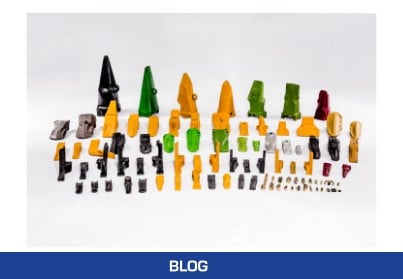

More Than Steel: Why Genuine Cat® Hardware (Bolts & Nuts) is Critical for Safety
More Than Steel: Why Genuine Cat® Hardware (Bolts & Nuts) is Critical for Safety
The Component That Prevents Catastrophe
Imagine the vibrations on a CAT D8 final drive, the torsional forces on a 336 excavator's slew ring, or the impact of a 972 loader's cutting edge hitting solid rock. What holds these massive, multi-ton components together? Small, often-overlooked bolts and nuts. In the world of heavy equipment, there is no room for "standard" fasteners from a hardware store. Caterpillar treats every bolt as a critical engineering component, designed to withstand forces that standard norms don't even consider.
Using a cheaper, non-genuine bolt in a critical joint (e.g., mounting a final drive, a cylinder, or a G.E.T. adapter) isn't saving money. It's inviting disaster—fatigue failure, a joint separation, and a breakdown that can cost hundreds of thousands. In this complete guide, based on CAT technical materials, we will explain why not all bolts are created equal.
The Physics of a Bolted Joint: Clamping Force, Not Holding Strength
The key misconception is that a bolt "holds" parts together. This is incorrect. A bolt acts like a very strong, precision spring. The secret lies in two concepts:
- 1. Clamping Force: When you tighten a bolt with a torque wrench, you are actually stretching it slightly. The stretched bolt, trying to return to its original shape, clamps the joined components (e.g., the final drive housing and the frame) together with a force of hundreds of kilonewtons. It is this massive clamping force that generates the friction to prevent the parts from shifting.
- 2. Friction Coefficient: This is the key to understanding the CAT philosophy. The torque value you read on your wrench is not equal to the clamping force. A staggering 85-90% of the torque you apply is lost to overcoming friction (on the threads and under the bolt head). Only 10-15% actually stretches the bolt!
Caterpillar designs its bolts and coatings so that this friction coefficient is ALWAYS consistent and predictable. Using a plain, "dry," or zinc-plated hardware store bolt means the friction coefficient is unknown. Torquing it to the CAT spec might result in 50% too little clamp (the joint loosens) or 50% too much (the bolt breaks).
Part 1: Anatomy of a Caterpillar Bolt – Why Is It Different?
At a glance, a CAT bolt looks like any other. The differences are in the material, hardening, and coatings.
a) Strength: Grade 10.9 vs. 8.8
Most standard hardware store bolts are Class 8.8. Caterpillar bolts used in critical joints (like G.E.T., final drives, frames) are typically ISO 10.9 or its US equivalent, SAE Grade 8.
What does this mean in practice? A 10.9 bolt has a much higher yield strength. It can be tightened with significantly more force before it begins to permanently deform. This allows it to generate over 40% more clamping force than an 8.8 bolt of the same size. Replacing a CAT 10.9 with a standard 8.8 and torquing it to the same spec is impossible (it will break), or if torqued "by feel," the clamping force will be dangerously low, and the joint will loosen under vibration.
b) Coatings: Phosphate & Oil
This is the secret to CAT's predictability. Most genuine Cat bolts have a black, matte finish. This isn't paint. It's a phosphate and oil coating.
Role: This coating isn't just for corrosion protection (though it does that well). Its main purpose is to provide a consistent and predictable friction coefficient. Thanks to this, the torque value specified in the CAT service manual, when applied to this specific bolt, will always translate into the correct clamping force (bolt stretch). Using a zinc-plated (silver) bolt, which has a completely different (higher) friction coefficient, will result in a much lower clamping force at the same torque wrench setting.
c) Special Coatings: Zinc Flake
For applications in extremely corrosive environments (e.g., salt water, landfills, chemical plants), Caterpillar uses an advanced zinc flake coating. This provides many times the corrosion resistance of standard galvanic zinc plating, while still maintaining a controlled friction coefficient.
d) Manufacturing Precision
Genuine Cat bolts are made to rigorous tolerances. The threads are rolled (not cut) to increase their fatigue resistance. The surface under the head is perfectly perpendicular to the thread axis, ensuring even clamping. In cheap bolts, these details are ignored, leading to uneven force distribution and failure.
Part 2: Nuts and Washers – The Unsung Heroes
All the engineering in a 10.9 Cat bolt is worthless if it's paired with a low-quality nut or washer. These two components are responsible for maintaining and distributing the clamping force.
a) Cat Hardened Nuts
The Rule of Grade Matching: A 10.9 bolt must be paired with a nut of equal or greater strength (in this case, Class 10).
Failure Analysis (Wrong Nut): What happens if you use a standard 8.8 or 5.0 grade nut from a hardware store with a 10.9 CAT bolt?
- While tightening, before the 10.9 bolt can properly stretch, the threads on the soft nut will strip. Your torque wrench will "click" (or you'll feel resistance), but it won't be from clamping force—it will be from the threads destroying themselves.
- Even if the threads hold, the soft nut will deform under the load, causing a loss of tension and a loose joint.
b) Cat Hardened Washers
This is probably the most underrated component, yet its role is critical.
Role of a Washer: A washer is not for "locking" (the clamping force does that). It serves two other key functions:
- Preventing Galling: The bolt head and nut are hardened. The machine frame or axle housing is relatively "soft" cast iron or steel. Without a washer, the hard bolt head would "dig in" and "plow" the soft frame material during tightening.
- Even Load Distribution: The hardened washer creates a large, perfectly flat surface that evenly distributes the immense clamping force from the bolt head over a wider area of the frame, preventing it from deforming.
Failure Analysis (Wrong Washer): Using a soft, standard washer is pointless. It will be crushed by the clamping force of a 10.9 bolt, deform, and immediately cause a loss of tension in the entire joint. That's why CAT washers are also made of hardened steel.
Part 3: The "System" Philosophy – Why You Must Never Mix Components
Caterpillar's technical materials state it repeatedly: the bolt, nut, and washer are one system (Cat Hardware System). They were designed and tested together to achieve one goal: a precise and repeatable clamping force at a specific torque value.
Anatomy of Failure: What Happens When You Mix and Match?
Let's say you're replacing the cutting edge on a CAT 966 loader. You use a new, genuine Cat 10.9 plow bolt (with its phosphate coating) but pair it with a cheap, shiny, zinc-plated 8.8 nut from the hardware store.
What happens?
1. You change the friction coefficient. Zinc has a different friction value than phosphate. The torque value in the CAT manual is now useless.
2. You change the strength class. Before the 10.9 bolt can reach its proper stretch, the soft 8.8 nut strips its threads.
3. Even though your torque wrench "clicked," the actual clamping force is 50% too low.
4. After a few hours of work, vibrations cause the nut to loosen.
5. A micro-gap forms. The joint begins to "work."
6. The hard CAT bolt begins to "hammer" the bolt holes, leading to ovalization.
7. Finally, under side-load forces, the bolt, which is no longer in tension, suffers a fatigue failure (it shears). The cutting edge falls off, destroying the bucket.
This same scenario applies to mounting a final drive (like a TRK) or a slew ring. Using incompatible components is not a saving; it's a guaranteed failure.
Part 4: Anatomy of Failure – Fatigue vs. Overload
A bolt fails for one of two reasons: it was overloaded (a single event) or it fatigued (a repeated event). Understanding the difference is key.
- Overload Failure: This happens when the force on the bolt exceeds its tensile strength. This is rare, usually happening during over-torquing (stripping threads) or a massive impact. The break is "ductile," and the metal looks stretched.
- Fatigue Failure (Most Common): This is the silent killer. It happens when the bolt is loose. The lack of clamping force allows the joint to "work," subjecting the bolt to cyclic bending and shearing forces. A micro-crack forms and grows with each cycle until the bolt snaps, even though it was never technically overloaded. 90% of broken bolts on machines are fatigue failures caused by them being loose.
Part 5: Service Best Practices – How to Tighten
Just having a Cat 10.9 bolt isn't enough. You must install it correctly.
- Clean Threads: The threads in the hole and on the bolt must be perfectly clean. Dirt, rust, or old thread locker will give a false torque reading.
- Never Use Standard Grease: Do not lubricate threads with regular grease! This drastically lowers the friction coefficient. Torquing a greased bolt to the "dry" spec will over-stretch and break it. If the CAT manual calls for lubrication (e.g., moly paste), use only what is specified.
- Use a Torque Wrench: For critical joints (engine, final drive, slew ring), there is no room for "feel." Only a torque wrench guarantees the bolt has been properly "stretched" to achieve the required clamping force.
- Use the Correct Sequence: When tightening a wheel or a final drive cover, always tighten in a "star" or "cross" pattern, and in multiple stages (e.g., 30% torque, then 60%, then 100%). This ensures even clamping.
- Never Re-use Critical Bolts: Bolts for track shoes, connecting rods, or cylinder heads are "torque-to-yield" bolts. After one torque cycle, they are permanently stretched and must be replaced with new ones every time they are removed.
FAQ - Frequently Asked Questions
1. What's the difference between 8.8, 10.9, and 12.9 grade bolts?
Their strength. The number before the dot ("10") is the minimum tensile strength (10 x 100 = 1000 MPa). The number after the dot ("9") is the yield strength (90% of 1000 MPa = 900 MPa). The higher the numbers, the stronger the bolt and the more torque it can handle.
2. Why can't I just use a 12.9 bolt instead of a 10.9, since it's stronger?
Because it's also more brittle. CAT engineers specifically choose 10.9 as the perfect balance between strength and ductility (resistance to cracking). A 12.9 bolt in a high-impact area (like a cutting edge) might shatter, whereas a 10.9 bolt would stretch and absorb the impact.
3. Is a Cat 10.9 bolt the same as a hardware store 10.9 bolt?
Not necessarily. They may have the same strength grade, but the Cat bolt has a guaranteed, consistent coating (phosphate + oil), which ensures a known friction coefficient. The store-bought bolt might be "dry," zinc-plated, or oiled inconsistently, making the CAT torque charts useless.
4. Are plow bolts (for cutting edges) special?
Yes. They have a special countersunk head to sit flush with the cutting edge and a square neck to lock into the adapter, preventing the bolt from spinning when the nut is tightened.
Saving on a Bolt Can Cost You a Wheel or a Boom.
Using fasteners of a guaranteed quality is the foundation of a safe repair. They are what hold critical components like KERTRACK undercarriage parts, TRK final drives, and CORESPEX pins together. We offer a full range of high-quality 10.9 grade bolts and nuts, including plow bolts, track shoe bolts, and final drive bolts that meet rigorous OEM standards. Contact us, and we'll help you select the right fasteners for your repair!
The materials and product descriptions contained in this article are for informational purposes only and do not imply that SERWIS KOP SP. Z O.O. SP. K. is an authorized distributor or representative of Caterpillar® (or any other manufacturer mentioned in the text). Names and trademarks are the property of their respective owners. Before purchasing or applying any product, we recommend checking the official manufacturer's recommendations and contacting an authorized service center. We are not responsible for any damages resulting from the use of materials described in this article.
Related posts
 Bandit — chippers, “The Beast” grinders, stump grinders: history, models, spare parts
Bandit — global leader in wood processing equipment. Explore brand history, extended model list and our aftermarket...
Read more
 Caterpillar (CAT) — history, series & models (ultra), spare parts: mini excavators, excavators, backhoe loaders
CAT — the global #1. Deep brand history, extended series/model lists and our spare parts offer (mini excavators,...
Read more
 Doosan — excavators, loaders, ADTs: history, models, spare parts
Doosan — brand history, DX/DL/DA families, extended model list and spare parts offer. VIN-based matching. Call: +48...
Read more
 Ecomat — compact skid steers & articulated loaders: history, models, spare parts
Ecomat — Italian compact loaders. Brand story, ES/ET/EL series, popular models and our spare parts offer. VIN/model...
Read more
 Eurocomach — mini/midi excavators & compact track loaders: history, models, spare parts
Eurocomach — Italian mini/midi excavators and compact track loaders. Explore brand history, popular ZT/TR/UR models...
Read more
WE OFFER PRODUCTS OF THE BEST BRANDS



















SERWIS KOP Sp. z o.o. Sp.k.
ul. Podkarpacka 57A, 35-082 Rzeszów
NIP: 813-352-97-49 REGON: 180286726
Opening hours
Telephone support - Monday - Friday (8:00 AM – 5:00 PM)
Order pick-up - Monday - Friday (8:00 AM – 4:30 PM)
Email
[email protected]
[email protected]
Gadu-Gadu communicator
GG: 4185846 - Daniel
ul. Podkarpacka 57A, 35-082 Rzeszów
NIP: 813-352-97-49 REGON: 180286726
Opening hours
Telephone support - Monday - Friday (8:00 AM – 5:00 PM)
Order pick-up - Monday - Friday (8:00 AM – 4:30 PM)
[email protected]
[email protected]
Gadu-Gadu communicator
GG: 4185846 - Daniel
Phone
+48 17 864 31 00
+48 17 864 00 24
+48 17 864 25 96
Mobile phone
+48 607-700-547
+48 695-944-818
+48 691-330-531
+48 690-906-751
Fax
+48 17 864 31 20
+48 17 864 31 00
+48 17 864 00 24
+48 17 864 25 96
Mobile phone
+48 607-700-547
+48 695-944-818
+48 691-330-531
+48 690-906-751
Fax
+48 17 864 31 20